William Henry Harrison
President #9 • Whig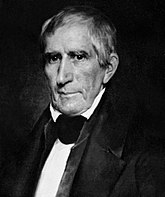
Summary
Positive
Harrison's presidency marked a significant shift in American political campaigning, being the first to engage in modern campaign tactics that mobilized a large electorate. His inaugural address set a tone for a post-Jacksonian executive branch, emphasizing executive restraint and congressional supremacy.
Negative
Harrison's presidency was marred by his premature death just thirty-one days into his term, which left a vacuum in leadership and highlighted the constitutional ambiguities surrounding presidential succession. His decision to deliver a lengthy inaugural address in poor weather is often cited as a contributing factor to his health decline.
Basic Information
| Full Name | William Henry Harrison |
|---|---|
| Party | Whig |
| Term | Mar 4, 1841 - Apr 4, 1841 |
| Lifespan | 1773–1841 |
| Vice President(s) | John Tyler, (Succeeded to presidency) |
| Prior Office | United States Minister to Colombia ((1828–1829)) |
| Note | (Died in office) |
Education
| Degree | Unknown |
|---|---|
| Studies | classics and history, military history |
Election Results
| Election Year(s) | 1840 |
|---|---|
| Primary Opponent(s) | Martin Van Buren |
| Popular Vote | 1275390 (52.9) |
| Electoral Votes | 234 / 294 |
| Voter Turnout | 80.2 |
William Henry Harrison: The Shortest Presidency and Its Lasting Impact
William Henry Harrison: The Shortest Presidency and Its Lasting Impact
William Henry Harrison, often remembered as the president with the shortest tenure in U.S. history, died just 31 days after taking office in 1841. Despite this brief time in power, Harrison's presidency offers profound insights into the transformation of American politics and the nature of presidential authority. His life story, marked by ambition and contradiction, continues to resonate today.
A Background Like No Other
Born on February 9, 1773, in Virginia to a family of political prominence, Harrison was steeped in aristocratic culture. His father signed the Declaration of Independence. However, Harrison’s life would be defined by his ability to connect with the emerging democratic spirit of the United States. Promoted as a rough-hewn frontiersman, he combined his elite upbringing with the image of a man of the people.
Prior to his presidency, Harrison’s career was a mix of military and political pursuits. He served with distinction in the Army and gained fame as the ''Hero of Tippecanoe'', a title secured by his leadership in a battle against Native Americans. This military reputation was crucial, as America was entering an era where a hero's reputation might successfully catapult them into political office.
The Election of 1840: A Revolutionary Campaign
The 1840 presidential election stands out as a milestone in American politics, often considered the first modern presidential campaign. Unlike the previous era’s focus on deferential politics, this election was all about mass participation and emotional engagement. Harrison's campaign, branded under the catchy slogan 'Log Cabin and Hard Cider', cleverly turned a Democratic mockery of his humble origins into a rallying cry. He was portrayed as a simple man who would connect with average Americans.
The Whig Party, which Harrison represented, was formed in opposition to the authoritarian policies of Andrew Jackson. In contrast to previous elections, the 1840 campaign was filled with parades, songs, and extensive grassroots mobilization. Voter turnout soared from about 57% to over 80%, indicating the effectiveness of these campaign strategies and the rising political engagement from the populace.
The Presidency: An End Before It Began
Harrison assumed office on March 4, 1841, delivering the longest inaugural address in history—an impressive 8,445 words. Unfortunately, he did so under harsh weather conditions, ultimately leading to his death from pneumonia just one month later. Even though his time in command was cut short, the implications of his presidency were significant. He inadvertently challenged the status quo surrounding presidential succession when he died in office, a situation that highlighted inadequacies in the Constitution regarding succession.
Achievements and Controversies
Despite the brevity of Harrison's presidency, some of his choices were notable:
- Campaign Philosophy: His presidency represented a shift towards the modern understanding of campaigning—active engagement with voters and reliance on emotional connection rather than just policy.
- Succession: Harrison's death raised questions about the constitutional process of succession, ultimately leading to the adoption of the 25th Amendment, which clarifies presidential succession and disability.
- Political Independence: Harrison stood up to party leaders, notably Henry Clay, asserting presidential power over party loyalty—a foundational concept in American governance.
However, Harrison's legacy is also marked by controversy:
- Slavery: His conversations surrounding slavery were complex. As governor of the Indiana Territory, he sought to implement laws that enabled slavery, contradicting his public persona as a man of the people.
- Native American Relations: Harrison's military actions against Native American tribes, including the negotiation of treaties that dispossessed them of their lands, sparked ethical questions that remain pertinent.
Lasting Impact
Even with a lasting absence of legislative accomplishments, Harrison's presidency significantly altered the landscape of American politics.
- Precedent for Campaigning: The campaign tactics employed during the election of 1840 set a precedent for all subsequent elections, focusing heavily on personality and image.
- Presidential Succession: His untimely demise advocated for clearer guidelines regarding the presidential line of succession, ultimately resulting in the 25th Amendment, which clarified many ambiguities surrounding presidential incapacity.
- Democratic Engagement: His campaign noted a shift that saw higher voter turnout, shaping political engagement norms in the United States.
Conclusion
William Henry Harrison's presidency, though fleeting, was crucial in shaping the future of political engagement in the United States. His life story, shaped by contradictions—an aristocrat masquerading as a populist, a military leader turning political candidate—highlighted the evolving nature of American governance in the early 19th century. While his presidency is often merely a trivia note in history, the changes triggered by his brief time in office resonate in the corridors of power to this day.
His legacy serves as a reminder of the political landscape's adaptability and continual evolution in American history.