Andrew Jackson
President #7 • Democratic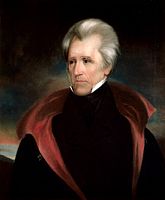
Summary
Positive
Andrew Jackson's presidency is marked by significant achievements such as the preservation of the Union during the Nullification Crisis, where he firmly declared that the Union was perpetual and used force against secession, setting a constitutional precedent that would be relied upon in the future. His administration also modernized American politics by replacing the elite-driven caucus system with mass mobilization and partisan loyalty.
Negative
Jackson's presidency is also characterized by severe failures, particularly the Indian Removal Act, which led to the forced displacement and suffering of Native American tribes, culminating in the Trail of Tears. His disregard for the Supreme Court's rulings and prioritization of white expansion over indigenous rights represent a significant moral failing and a violation of civil liberties.
Basic Information
| Full Name | Andrew Jackson |
|---|---|
| Party | Democratic |
| Term | Mar 4, 1829 - Mar 4, 1837 |
| Lifespan | 1767–1845 |
| Vice President(s) | John C. Calhoun, Martin Van Buren |
| Prior Office | U.S. Senator (Class 2) from Tennessee ((1797–1798 & 1823–1825)) |
Education
| Degree | Unknown |
|---|---|
| Studies | Unknown |
Election Results
| Election Year(s) | 1828 |
|---|---|
| Primary Opponent(s) | John Quincy Adams |
| Popular Vote | 647286 (56.0) |
| Electoral Votes | 178 / 261 |
| Voter Turnout | 57.6 |
Andrew Jackson: The People's President and His Controversial Legacy
Andrew Jackson: The People's President and His Controversial Legacy
Andrew Jackson, the seventh President of the United States, served from 1829 to 1837. His presidency marked a defining moment in American history, as he ushered in a new era of political engagement known as Jacksonian democracy. But Jackson’s legacy is anything but simple—it contains remarkable achievements alongside significant controversies.
The Rise of a Common Man
Born on March 15, 1767, in a humble settlement on the Carolina border, Jackson experienced a childhood steeped in hardship. The loss of his family members during the Revolutionary War shaped him into a fierce and sometimes fiery figure. By the time he became president, Jackson had transitioned from an orphaned youth to a decorated military leader, most notably recognized for his victory at the Battle of New Orleans in the War of 1812. His military successes made him a household name and helped build a loyal following.
A New Kind of Politician
Unlike his predecessors, Jackson emerged from the western frontier instead of the established political elite of the east. His presidency ushered in a paradigm shift: he became the first president to appeal to the common man, emphasizing the importance of popular sovereignty. Jacksonian democracy sought to empower white male citizens through increased political participation, making elections more about the voice of the masses rather than the influence of a few wealthy elites.
Jackson's Presidential Achievements
Reforming Politics through the Spoils System
Upon taking office, Jackson made waves by introducing the