Donald J. Trump
President #47 • Republican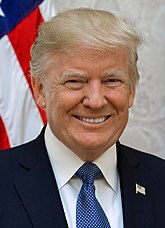
Summary
Positive
President Trump's second term has been marked by significant tactical victories, including securing a fragile ceasefire in Gaza, passing the 'One Big Beautiful Bill Act,' and reshaping the federal judiciary with the appointment of 27 judges, ensuring a conservative legal bulwark against future progressive legislation.
Negative
The administration faced significant challenges, including rising energy prices contrary to promises, a controversial attempt to purchase Greenland that damaged NATO relations, and the invocation of the Alien Enemies Act, which raised concerns about civil liberties and executive overreach.
Basic Information
| Full Name | Donald J. Trump |
|---|---|
| Party | Republican |
| Term | Jan 20, 2025 - |
| Lifespan | Born 1946 |
| Vice President(s) | JD Vance |
| Prior Office | Chairman of The Trump Organization |
Education
| Degree | Bachelor of Science in economics |
|---|---|
| Studies | Unknown |
Election Results
| Election Year(s) | 2024 |
|---|---|
| Primary Opponent(s) | Kamala Harris |
| Popular Vote | 77,302,580 (49.8%) |
| Electoral Votes | 312 / 538 |
| Voter Turnout | 64.1% |
Inside Donald Trump's Second Term: A Year of Controversies, Achievements, and Radical Policies
The Restoration and the Reckoning: The First Year of Trump's Second Presidency
Donald Trump's inauguration on January 20, 2025, brought him back to the presidential office after a four-year interruption, making him the only U.S. president except Grover Cleveland to serve two non-consecutive terms. Unlike Cleveland, whose return was marked by the conservative politics of the late 19th century, Trump's second term has been anything but traditional, igniting fervent debate and concern about the future of American democracy.
The year was one of absolute upheaval, where the stakes were high not only for Trump and his goals but also for American institutions at large. As we look back at the initial twelve months of Trump's presidency, we examine both his notable accomplishments and the intense controversies he stirred.
1. Transforming Expectations: The Agenda
Upon taking office in 2025, Trump was no longer the political novice who first won in 2016. Instead, he stepped into his role as a battle-tested president equipped with a strategic vision he dubbed "Agenda 47". This platform was a far more ambitious and radical plan for America, with proposals ranging from creating "freedom cities" to direct elections for school principals. It was clear that this time Trump was ready to reshape and streamline government to fit his agenda, prioritizing loyalty over experience in his Cabinet selections.
His first year was dominated by a whirlwind of activities, pushing through the "One Big Beautiful Bill Act" (OBBBA), a legislative package that aimed to lock in tax reforms, escalate energy deregulation, and overhaul immigration policy. Though it passed by tightly contested votes, it showcased Trump's ability to mobilize party supporters, demonstrating a significant shift in American political theater.
2. Controversial Executive Actions
The new administration’s approach to governance has been characterized by an aggressive use of executive power, which alarmed many critics. One controversial move was the invocation of the Alien Enemies Act from the 18th century. This allowed Trump to detain and deport foreign nationals from designated groups tied to organized crime. Such actions raised civil liberties alarms, as critics argued that it created dangerous precedents that could undermine due process rights.
Further tumult arose with the so-called "Greenland Crisis" when Trump sought to purchase the territory from Denmark, instigating a diplomatic fallout that strained international relations. Protests against what many viewed as an imperialist approach echoed throughout Europe, further isolating the U.S. on the global stage.
3. Economic Challenges Amid Policies
Despite ambitious legislation like the OBBBA, Trump's policies had unintended economic consequences. Energy prices surged during 2025, contradicting his pledges to slash household costs significantly. Inflation reached a concerning level as tariffs and deregulations affected everyday pricing for goods and necessities. Though employment rates remained relatively stable, the purchasing power of many Americans faced erosion, presenting a stark contrast to the administration's narrative of growth and recovery.
Trump’s economics also catered to his base to build political capital, emphasizing tax cuts and expanding credits for families while simultaneously escalating national debt.
4. Achievements and Legislation
Nonetheless, Trump's first year also featured victories that energized his supporters. Aside from the legislative triumphs of OBBBA, which embodied tax cuts and deregulation, the administration secured a truce in the long-standing conflict in Gaza through innovative diplomacy. This achievement was framed as proof of Trump's unique ability to pursue peace through unconventional methods, enhancing his claim of being a transformative leader in foreign policy.
Additionally, the major push for conservative judicial appointments continued, solidifying Trump's influence over the federal judiciary and likely shaping the legal landscape for years to come.
5. The Battlefield of Congress
Unlike his first term, where Trump often operated as an outsider attempting to navigate entrenched political hostilities, his second term showcased a transition to a more combative relationship with Congress. Bipartisanship waned significantly, with the administration characterizing Congressional relations as transactional rather than collaborative. Vetoing bipartisan bills became a tool for solidifying loyalty within his party while creating a climate of fear within GOP ranks—a tactic designed to consolidate Trump's control.
6. Conclusion: Looking Ahead
While Trump's first year in office did see notable victories, it was hardly without pitfalls. His presidency exemplifies the growing polarization and partisanship within American politics and questions about the future of democratic governance. Could Trump's unyielding executive style prove to be an effective model for future leaders, or would it signal greater risks to the values of the American republic?
As the new administration presses on, the landscape shifts continuously, mixing fervor with contention, presenting a uniquely American drama that continues to unfold. The legacy of this presidency, built in stark contrast to traditional norms, will undoubtedly shape future political discourse, calling into question the boundaries of presidential power and accountability.