Joe Biden
President #46 • Democratic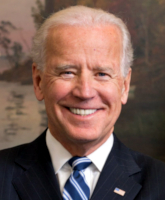
Summary
Positive
Biden's presidency is marked by significant legislative achievements, including the American Rescue Plan, the Infrastructure Investment and Jobs Act, the CHIPS and Science Act, and the Inflation Reduction Act, which collectively represent the most substantial expansion of the American social safety net and industrial base since the Great Society. His foreign policy efforts reinvigorated alliances and addressed global challenges, particularly in response to the Russian invasion of Ukraine.
Negative
Biden's presidency faced challenges including a chaotic withdrawal from Afghanistan, which damaged his competence ratings, and controversies surrounding classified documents and his son Hunter Biden's legal issues. His administration struggled with inflation and a divided Congress, which limited the effectiveness of his legislative agenda and ultimately led to a political repudiation in the 2024 elections.
Basic Information
| Full Name | Joe Biden |
|---|---|
| Party | Democratic |
| Term | Jan 20, 2021 - Jan 20, 2025 |
| Lifespan | Born 1942 |
| Vice President(s) | Kamala Harris |
| Prior Office | 47th Vice President of the United States |
Education
| Degree | Juris Doctor |
|---|---|
| Studies | History, Political Science |
Election Results
| Election Year(s) | 2020 |
|---|---|
| Primary Opponent(s) | Donald Trump |
| Popular Vote | 81283501 (51.3%) |
| Electoral Votes | 306 / 538 |
Joseph Biden: Navigating a Tumultuous Presidency and Shaping America's Future
Introduction: A President in Challenging Times
When Joe Biden assumed the presidency on January 20, 2021, America was grappling with two monumental challenges: a raging pandemic and a political landscape scarred by insurrection. Elected on the promise of restoring American norms and tackling inequality, Biden stepped into the role with a heavy mandate. His presidency would be defined by attempts to stabilize a fractured nation while setting ambitious plans to rebuild its economy and redefine its global standing.
The Unique Challenges of Biden’s Presidency
Biden's tenure unfolded amid a political environment starkly different from any seen in recent history. His election victory over Donald Trump in 2020 wasn’t just about party lines; it was a coalition of progressives, moderates, and disenchanted Republicans uniting to defend democracy. However, Biden's presidency also laid the groundwork for a turbulent legacy that culminated in his voluntary withdrawal from the 2024 election process and a political repudiation from voters, marking him the first president since Lyndon B. Johnson to take such a step.
Biden’s Legislative Achievements
Despite the political turbulence, Biden's administration made significant strides in reshaping America's policy landscape. His approach, often referred to as "Bidenomics," shifted focus from decades of neoliberal policies towards a model emphasizing direct investment in domestic industries and green energy.
This pivot was evident in several landmark legislative acts:
-
The American Rescue Plan Act (March 2021): In response to the COVID-19 crisis, this $1.9 trillion plan provided direct relief to Americans and aimed to stimulate the economy, offering payments to individuals, enhanced unemployment benefits, and funding for vaccine distribution.
-
Infrastructure Investment and Jobs Act (November 2021): This bipartisan success saw $1.2 trillion allocated for vital infrastructure improvements—including roads, bridges, and broadband access—highlighting Biden's belief in cross-party collaboration.
-
The CHIPS and Science Act (August 2022): Aimed at bolstering American semiconductor production, this act allocated $52.7 billion to grow U.S. technology capacity and address national security vulnerabilities related to foreign supply chains.
-
Inflation Reduction Act (August 2022): This legislation focused on climate change and healthcare, marking the largest climate investment in U.S. history with $369 billion aimed at promoting renewable energy.
These measures collectively expanded the social safety net and shifted the federal government’s role into a proactive position in economic recovery and environmental responsibility.
Foreign Policy Challenges
Navigating international politics brought its own set of challenges. The political landscape altered drastically following Biden's ambitious plans, calling for reinvigorated alliances while positioning the U.S. strategically against global powers like China.
His presidency also saw turbulent moments, particularly in foreign affairs:
- Withdrawal from Afghanistan (August 2021): Intended to end two decades of military engagement, the chaotic retreat led to severe backlash over the U.S. handling of the evacuation.
- Russia’s Invasion of Ukraine (February 2022): This event tested Biden’s diplomatic mettle, prompting him to build international coalitions and implement stringent sanctions against Russia while delivering extensive military aid to Ukraine.
In navigating these international crises, Biden aimed to reinforce America’s role as a key global player, even as his administration faced criticism for how these complex situations were managed.
The Personal and Political Turmoil
Biden's presidency didn't escape scandals and controversies. From his son Hunter's legal troubles to the classified documents investigation, the complexities of personal and public scrutiny intensified. Critics used the scrutiny against Biden to question his mental acuity, leading to a challenging narrative as he approached the 2024 election.
- Classified Documents Investigation: The discovery of classified materials in Biden's possession prompted an investigation that unearthed public concerns regarding his memory and judgment.
- Hunter Biden's Troubles: Hunter’s legal issues consistently dominated political conversations, impacting perceptions of Biden and his administration’s credibility.
The Conclusion of Biden's Era
Biden’s presidency was marked by both significant legislative successes and profound hurdles. In the end, his vision of a restored America battled against an electorate eager for rapid change. The landscape he navigated resulted in a redefined Democratic Party grappling with fragmentation and a Republican resurgence facilitated by Trump’s return to power.
As he left office, Biden became part of a complex political legacy; while he made profound strides in the legislative arena, his inability to connect fully with the American populace diminished the impact of his reforms. Because the 2024 election returned Trump to prominence, Biden is now viewed as part of an interregnum rather than a definitive turning point in American politics. The question remains—did his administration truly reflect the will of the people?