Barack Obama
President #44 • Democratic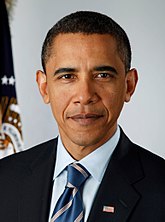
Summary
Positive
Barack Obama's presidency is marked by significant achievements such as the Affordable Care Act, which expanded healthcare coverage to millions, and the successful management of the economic crisis through the American Recovery and Reinvestment Act. His administration also made strides in foreign policy, including the Iran Nuclear Deal and the normalization of relations with Cuba, showcasing a commitment to diplomacy and multilateralism.
Negative
Critics of Barack Obama's presidency point to failures such as the handling of the Syrian civil war, where his failure to enforce a 'red line' on chemical weapons use damaged U.S. credibility. Additionally, the Democratic Party suffered significant losses at the state level during his tenure, leading to a weakened party infrastructure and challenges in regaining control in subsequent elections.
Basic Information
| Full Name | Barack Obama |
|---|---|
| Party | Democratic |
| Term | Jan 20, 2009 - Jan 20, 2017 |
| Lifespan | Born 1961 |
| Vice President(s) | Joe Biden |
| Prior Office | U.S. Senator (Class 3) from Illinois ((2005–2008) ) |
Education
| Degree | Juris Doctor (J.D.) |
|---|---|
| Studies | Political Science, International Relations, English Literature |
Barack Obama: A Presidency of Change and Controversy
The Presidency of Barack Obama: A Historical Overview
Barack Obama, the 44th president of the United States, is often remembered not just as a leader, but as a symbol of change in America. His journey to the White House was both unique and inspiring, marked by the challenges he faced and the bold policies he implemented during and after his time in office.
A Journey of Resilience and Intellect
Obama's rise to political prominence is a remarkable story. Born in Honolulu, Hawaii, to a diverse family, he attended some of the best schools in the nation, including Harvard Law School, where he became the first African American president of the Harvard Law Review. His education not only equipped him with legal skills but also sharpened his ability to engage with complex issues from various angles.
Before his time in Washington, Obama worked as a community organizer on the South Side of Chicago, where he tackled issues like housing and job training. This grassroots activism laid the foundation for his belief in bottom-up change – a principle that would guide his policy decisions as president.
Historic Challenges: The 2008 Election
Obama's climb to the presidency culminated in a stunning victory in the 2008 election, against the backdrop of an economic crisis that was causing severe distress across the nation. His campaign mobilized a coalition of young voters, minorities, and the educated elite, all united by a common call for change. He won the election with approximately 69 million votes, securing the highest percentage of the popular vote for a Democrat since Lyndon B. Johnson in 1964.
Achievements and Controversies
During his eight years in office, Obama faced enormous challenges but also delivered significant achievements. Here, we explore both sides:
Major Accomplishments
- Affordable Care Act (Obamacare): Perhaps his most renowned legislative achievement, the ACA aimed to expand healthcare access to millions of Americans. It eliminated pre-existing condition exclusions and allowed young people to stay on their parents' insurance until age 26. Despite partisan backlash, the uninsured rate significantly dropped during his presidency.
- Economic Recovery: Obama inherited an economy in free fall and enacted the American Recovery and Reinvestment Act to spur growth. His administration also oversaw the auto industry bailout, saving millions of jobs and stabilizing a key sector.
- Diplomatic Achievements: Notably, Obama was awarded the Nobel Peace Prize in 2009 for his vision of a nuclear-free world and initiated significant agreements, including the Iran Nuclear Deal and the Paris Climate Agreement.
Controversies and Critiques
Despite these successes, Obama's presidency was not without controversy:
- Partisan Polarization: His tenure saw increasing political divisiveness, particularly after the Republicans won control of the House of Representatives in 2010. An atmosphere of hostility prevailed, impacting his ability to enact further legislation and fostering deep political rifts.
- Foreign Policy Challenges: Instances like the military intervention in Libya raised questions about U.S. strategy abroad. The lack of a post-conflict stabilization plan contributed to chaos in the region.
- IRS Targeting Scandal and Benghazi: The administration faced scrutiny regarding its handling of the IRS’s inappropriate targeting of conservative groups and the aftermath of the 2012 Benghazi attacks, which fueled conspiracy theories and alleged cover-ups.
Lasting Impact
Obama's presidency was transformative, fundamentally reshaping American politics, healthcare, and foreign relations. However, his administration also left a fragmented political landscape. While he achieved historical reforms, he struggled to maintain the Democratic Party's power at federal and state levels, resulting in significant losses during the 2010 midterms.
Conclusion
Barack Obama's presidency exemplifies both the potential for change and the challenges of governance in a divided political environment. His legacy will continue to be debated, reflecting the complexity and duality of his presidency: a period marked by unprecedented achievements overshadowed by challenges that persist to this day. In navigating the complexities of American politics, Obama left an indelible mark on the nation, inspiring future generations to pursue public service and engagement in the democratic process.