Lyndon Baines Johnson
President #36 • Democratic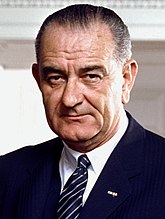
Summary
Positive
Lyndon Baines Johnson's presidency is marked by significant achievements in civil rights and social welfare, including the passage of the Civil Rights Act of 1964 and the Voting Rights Act of 1965, as well as the establishment of Medicare and Medicaid, which transformed healthcare for millions of Americans. His ambitious Great Society agenda aimed to eliminate poverty and racial injustice, leading to a dramatic reduction in the poverty rate.
Negative
Johnson's presidency was overshadowed by the escalation of the Vietnam War, which resulted in significant loss of life and public disillusionment. His foreign policy decisions, particularly the Gulf of Tonkin Resolution and the Americanization of the war, led to a credibility gap and a fracture in public trust towards the government. Additionally, his economic policies contributed to inflation and economic instability.
Basic Information
| Full Name | Lyndon Baines Johnson |
|---|---|
| Party | Democratic |
| Term | Nov 22, 1963 - Jan 20, 1969 |
| Lifespan | 1908–1973 |
| Vice President(s) | Office vacant, November 22, 1963 – January 20, 1965, Hubert Humphrey, January 20, 1965 – January 20, 1969 |
| Prior Office | 37 Vice President of the United States |
Education
| Degree | bachelor's degree in education |
|---|---|
| Studies | education |
Election Results
| Election Year(s) | 1964 |
|---|---|
| Primary Opponent(s) | Barry Goldwater |
| Popular Vote | 43129040 (61.1%) |
| Electoral Votes | 486 / 538 |
Lyndon B. Johnson: The President Who Shaped a Nation
Johnson Treatment"—a mix of persuasion, intimidation, and charm.
A President of Change
Johnson’s presidency began after the assassination of John F. Kennedy in November 1963. He faced the immense task of continuing Kennedy’s agenda amidst a country in mourning. His political acumen allowed him to translate this national grief into legislative action, famously urging Congress to adopt Kennedy's stalled Civil Rights legislation.
In 1964, Johnson won a landslide election victory against Barry Goldwater, a conservative whose radical ideas about dismantling the New Deal alarmed many voters. Johnson’s campaign celebrated government as a tool for good, promising to build a “Great Society” that would expand civil rights, reduce poverty, and promote education alongside economic growth.
Domestic Triumphs
Johnson’s domestic agenda led to some of the most significant reforms in American history:
- Civil Rights Act of 1964: This landmark legislation prohibited discrimination in public accommodations and employment, overcoming intense resistance from segregationist lawmakers.
- Voting Rights Act of 1965: Fueled by the brutal events of “Bloody Sunday” in Selma, this law aimed to eliminate barriers that prevented African Americans from voting, resulting in a dramatic increase in voter registration.
- The Great Society Programs: Initiatives like Medicare and Medicaid provided healthcare to millions, while programs such as Head Start offered early education for disadvantaged children.
While these accomplishments marked a shift in government responsibility toward citizens’ welfare, they also sowed division among Johnson’s supporters and critics. Some argued that expanding government programs fostered dependency.
The Vietnam Dilemma
While Johnson's domestic achievements brought him admiration, his foreign policy—particularly the Vietnam War—would become his Achilles' heel. Initially, Johnson increased U.S. military support in South Vietnam, believing in the domino theory: if one Southeast Asian nation fell to communism, others would follow. This culminated in the Gulf of Tonkin incident in 1964, which provided a pretext for escalating U.S. involvement.
Despite initial support, as the war dragged on and casualties mounted, public sentiment soured. Protests swept the nation, and Johnson struggled to maintain support for a war that seemed increasingly futile. The Tet Offensive in 1968 marked a turning point where the war’s brutal reality shattered the government’s optimistic narrative.
As public dissatisfaction with the war rose, it overshadowed Johnson's legislative victories. By 1968, he chose not to seek re-election, a sign of the significant political shift he faced.
Legacy and Controversies
Johnson's legacy is a double-edged sword. On one hand, he is celebrated for pushing through groundbreaking civil rights laws and social programs that profoundly impacted American society. On the other hand, the horrific toll of the Vietnam War fostered a pervasive mistrust in government—a sentiment that resonates to this day.
- Accomplishments: Johnson's efforts in civil rights and welfare established a framework for future policies aimed at reducing inequality and injustice.
- Critiques: His handling of Vietnam reshaped American politics, creating a more polarized electorate and leading to the rise of the conservative movement in the South.
Conclusion
Lyndon B. Johnson's presidency was a watershed moment in American history. His policies aimed at building a fairer society remain impactful, but the shadow of Vietnam serves as a cautionary tale about the costs of war and the complexities of governance. Johnson embodied the struggle for progress, battling both social injustices and a tumultuous political landscape. Ultimately, he is remembered as a potent political figure whose ambition and vision changed the face of America, proving that while the presidency can be a powerful tool for good, it can also lead to disastrous consequences when misused.