Harry S. Truman
President #33 • Democratic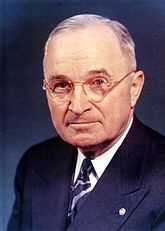
Summary
Positive
Truman's presidency is marked by significant accomplishments including the establishment of the Marshall Plan, the Truman Doctrine, and the recognition of Israel, which laid the groundwork for U.S. foreign policy in the post-war era. He also made strides in civil rights by desegregating the military and advocating for social security reforms, demonstrating a commitment to both internationalism and domestic equity.
Negative
Truman faced considerable challenges during his presidency, including the Korean War stalemate, which eroded public support, and the corruption scandals that plagued his administration, leading to a perception of a 'mess in Washington'. His attempts at national health insurance were thwarted, and his loyalty program inadvertently fueled the Red Scare.
Basic Information
| Full Name | Harry S. Truman |
|---|---|
| Party | Democratic |
| Term | Apr 12, 1945 - Jan 20, 1953 |
| Lifespan | 1884–1972 |
| Vice President(s) | Office vacant, April 12, 1945 – January 20, 1949, Alben W. Barkley, January 20, 1949 – January 20, 1953 |
| Prior Office | 34 Vice President of the United States |
Education
| Degree | Unknown |
|---|---|
| Studies | Unknown |
Election Results
| Election Year(s) | 1948 |
|---|---|
| Primary Opponent(s) | Thomas E. Dewey |
| Popular Vote | 24179347 (49.6%) |
| Electoral Votes | 303 / 531 |
| Voter Turnout | 51.1% |
Harry S. Truman: The Man Behind the Presidential Desk
Harry S. Truman: The Man Behind the Presidential Desk
Harry S. Truman was not your typical president. Rather than a life of privilege, he emerged from humble beginnings, navigating the journey that led to the presidency amid global upheaval. His presidency, from 1945 to 1953, was marked by monumental decisions that shaped the modern world. This article takes a closer look at Truman's unique path, his substantial achievements, and the controversies that defined his time in office.
A Journey from Missouri to Washington
Truman was born on May 8, 1884, in Lamar, Missouri, and grew up in Independence, a town imbued with the old-world charm of the Upper South. He was the last U.S. president to lack a formal college degree, graduating from high school in 1901 yet harboring dreams of further education. Economic hardships hit the Truman family hard, forcing him to abandon his college ambitions for various jobs to help the household.
While his early professional life seemed unremarkable—a stint selling memberships at the Kansas City Automobile Club—he later entered politics with the help of the Pendergast machine, a powerful Democratic organization in Kansas City. His first major political role was as a county judge, which set the stage for his future endeavors.
The Unexpected Presidency
Truman's rise to the presidency was a surprise to many. He became Vice President under Franklin D. Roosevelt in 1945. However, when Roosevelt died suddenly, Truman took over, entering a world in turmoil. World War II was still raging, and the challenges awaiting him were monumental. Truman's decision to use atomic bombs on Hiroshima and Nagasaki to end the war remains one of the most controversial choices in American history, marking the United States as a nuclear power overnight.
The Truman Doctrine: A New Foreign Policy
One of Truman's most significant contributions was the formulation of the Truman Doctrine in 1947. This policy declared that the United States would support countries resisting communism, fundamentally shifting American foreign relations from isolationism to a more interventionist stance. Through initiatives like the Marshall Plan, which pumped money into post-war Europe, Truman aimed to rebuild economies and stave off communism, reflecting his forward-thinking strategy for global engagement.
The establishment of NATO (North Atlantic Treaty Organization) further solidified this commitment, formalizing a military alliance with Western Europe for mutual defense. Truman's vision was that a united West could deter Soviet expansionism, and he believed that failure to act would lead to broader conflict.
Domestic Affairs: Fair Deal and Civil Rights
Domestically, Truman sought to extend FDR's New Deal through his Fair Deal program, which aimed to improve social welfare and civil rights. He was the first president to address the NAACP and made strides towards desegregating the military. His order to integrate the armed forces sent ripples through American society, showing a commitment to civil rights at a time when such ideas were less popular.
Despite the ambitiousness of his policies, Truman faced pushback from a conservative Congress. Many of his Fair Deal proposals, such as national healthcare, were rejected, leading to frustration and political strife amid a backdrop of post-war inflation and growing civil rights tensions.
The Controversies and Challenges
Truman's presidency was not without its controversies. The **