Calvin Coolidge
President #30 • Republican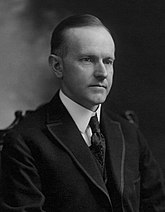
Summary
Positive
Calvin Coolidge's presidency is marked by the restoration of executive dignity, significant debt reduction, and the enactment of the Indian Citizenship Act, which granted full citizenship to Native Americans. His administration is also noted for its fiscal discipline and the promotion of economic stability during the Roaring Twenties.
Negative
Critics argue that Coolidge's presidency was characterized by negligence towards the agricultural crisis and rampant stock market speculation, which he ignored. His isolationist policies and refusal to engage politically with Europe contributed to the fragility of the international economic system, ultimately leading to the Great Depression.
Basic Information
| Full Name | Calvin Coolidge |
|---|---|
| Party | Republican |
| Term | Aug 2, 1923 - Mar 4, 1929 |
| Lifespan | 1872–1933 |
| Vice President(s) | Office vacant, August 2, 1923 – March 4, 1925, Charles G. Dawes, March 4, 1925 – March 4, 1929 |
| Prior Office | 29 Vice President of the United States |
Education
| Degree | Bachelor of Arts |
|---|---|
| Studies | philosophy, history, oratory |
Election Results
| Election Year(s) | 1924 |
|---|---|
| Primary Opponent(s) | John W. Davis |
| Popular Vote | 15724310 (54.0) |
| Electoral Votes | 382 / 531 |
| Voter Turnout | 48.9 |
Calvin Coolidge: The Silent President Who Shaped the Roaring Twenties
Calvin Coolidge: The Silent President Who Shaped the Roaring Twenties
Calvin Coolidge, the 30th President of the United States, often affectionately known as “Silent Cal,” led his country through one of its most prosperous eras, the 1920s. His distinct style and policies left a significant impact on American governance, economics, and social fabric.
A Unique Background and Rise to Power
Unlike many of his predecessors, Coolidge’s rise to power was not marked by war heroism or charismatic populism. Instead, he climbed the political ladder through sheer perseverance. He started as a modest city councilman in Northampton, Massachusetts, and gradually rose through local and state offices, including the roles of mayor and governor. His political journey is often referred to as an “escalator” model. This steady rise provided him with an in-depth understanding of government machinery, a rarity among presidents at that time.
Education and Personal Philosophy
Coolidge’s education was grounded in the classics and civil duty, instilling in him a philosophy that emphasized the importance of personal integrity and responsibility. Educated at Amherst College, he developed a concise, logical style of communication, favoring practicality over flamboyance. This approach helped define his presidency, which was characterized by what he termed “active inactivity” – a commitment to limiting government intrusion in daily life.
An Accidental President
Coolidge ascended to the presidency following the death of Warren G. Harding in 1923. His initial term was seen as a succession, but his election in 1924 solidified his position. Running on the slogan “Keep Cool with Coolidge,” he capitalized on the public’s desire for stability following the tumultuous Harding administration, which was marred by corruption scandals.
The 1924 Election: A Mandate for Conservatism
In the 1924 election, Coolidge faced a fragmented opposition with John W. Davis representing the Democrats and Robert La Follette leading the Progressives. He achieved a resounding victory, capturing 54% of the popular vote. His campaign emphasized economic recovery, governmental integrity, and conservative fiscal policies. This election served as a clear mandate for his conservative approach to governance during the prospering Roaring Twenties.
Major Accomplishments
Economic Prosperity
Coolidge’s presidency is often associated with what is termed “Coolidge Prosperity.” His administration prioritized fiscal restraint, achieving significant budget surpluses while reducing the national debt from $22.3 billion in 1923 to $16.9 billion by 1929. Coolidge believed that a government should create conditions for economic growth rather than meddle in it.
- Revenue Act of 1926: This act dramatically lowered income tax rates, promoting investment and growth. The cuts were beneficial, as federal revenue rose despite lower tax rates, showcasing the benefits of his supply-side economic approach.
- The Dawes Plan (1924): His administration helped restructure German reparations post-World War I, using American loans to stabilize Europe economically. This illustrated a novel approach to foreign relations, using financial influence instead of military pressures.
- Legislation: Under his leadership, key legislation like the Immigration Act of 1924 established strict immigration quotas, impacting the demographic landscape of the country for decades.
- Indian Citizenship Act (1924): This act granted full citizenship rights to Native Americans born in the U.S., marking a significant shift in the relationship between the government and indigenous peoples, though many challenges persisted on the ground.
Foreign Policy Achievements
Coolidge’s foreign policy was marked by an isolationist stance. He believed the U.S. should avoid entanglement in European political affairs. His administration worked towards peaceful diplomacy, successfully negotiating with countries like Mexico to maintain American interests without military confrontation.
Controversies and Criticisms
Despite his successes, Coolidge’s administration was not free from criticism. His approach to issues like the agricultural crisis and labor strikes raised eyebrows:
- McNary-Haugen Farm Relief Bill: He vetoed this bill, which aimed to support struggling farmers during economic hardship, arguing it would set a dangerous precedent.
- Labor Relations: His hardline response to labor unrest, notably during the Boston Police Strike, brought him national recognition but also sparked debates about civil rights and workers' rights. His famous statement, “There is no right to strike against the public safety by anybody, anywhere, any time,” showcased his commitment to maintaining order at all costs.
Legacy and Conclusion
Historians remain divided on Coolidge's legacy. On one hand, he is hailed for restoring dignity to the presidency after Harding's scandals, promoting economic stability, and embracing civil rights for Native Americans. On the other hand, critics argue his unwillingness to adapt during agricultural crises set the stage for economic downturns, eventually contributing to the Great Depression.
In sum, Calvin Coolidge was a man of principle, favoring government restraint and fiscal conservatism at a pivotal time in U.S. history. His presidency reminds us that political philosophy and governance often shape the nation's future pathways, weaving together economic success, social challenges, and the evolving American identity.