Thomas Jefferson
President #3 • Democratic-Republican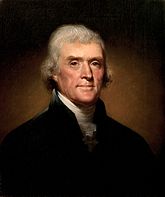
Summary
Positive
Jefferson's presidency is marked by significant achievements such as the Louisiana Purchase, which doubled the size of the United States and secured vital territory for future generations. His administration successfully reduced the national debt and implemented fiscal reforms, including the repeal of internal taxes. Jefferson's commitment to agrarianism and limited government principles reshaped American political philosophy and established a precedent for peaceful transitions of power.
Negative
The Embargo Act of 1807 stands as a major failure of Jefferson's presidency, leading to economic devastation and a significant drop in exports. This policy not only caused widespread unemployment and hardship but also revived the Federalist Party, undermining Jefferson's political standing. Additionally, controversies such as the Sally Hemings scandal and the Burr conspiracy raised questions about his moral character and executive authority.
Basic Information
| Full Name | Thomas Jefferson |
|---|---|
| Party | Democratic-Republican |
| Term | Mar 4, 1801 - Mar 4, 1809 |
| Lifespan | 1743–1826 |
| Vice President(s) | Aaron Burr, George Clinton |
| Prior Office | 2nd Vice President of the United States |
Education
| Degree | Honorary Doctor of Laws (LL.D.) |
|---|---|
| Studies | Classical rationalism, legalistic precision, natural philosophy, mathematics |
Election Results
| Election Year(s) | 1800 |
|---|---|
| Primary Opponent(s) | John Adams |
| Electoral Votes | 73 |
Thomas Jefferson: Revolutionary Ideals and Controversial Legacy
Thomas Jefferson: Revolutionary Ideals and Controversial Legacy
Thomas Jefferson is a name that carries weight in the history of the United States. As the third president from 1801 to 1809, he was not just a leader but a forward-thinking visionary. His life was a tapestry woven from the threads of philosophy, governance, and a passionate belief in democracy. However, Jefferson's legacy is filled with contradictions that spark debate among historians and citizens alike. Let’s delve into the story of this complex figure.
Early Life and Education
Born in 1743 in colonial Virginia, Jefferson grew up amid the lush landscapes of the South, where he was steeped in tradition but also exposed to the Enlightenment—a period that emphasized reason and individualism. After years of study at the College of William & Mary, he became deeply influenced by great thinkers of his time, such as John Locke, who advocated for natural rights and limited government.
At just 16, Jefferson started his academic journey at William & Mary, where he was notably guided by Dr. William Small, a mathematics professor who helped shape his scientific and analytical thinking. This educational background laid the groundwork for his political philosophy, marrying ideals of liberty with empirical reasoning.
Path to Power: A Political Evolution
Jefferson's political ascent was steady and calculated. From serving in the Virginia House of Burgesses to becoming the principal author of the Declaration of Independence, he defined himself as a passionate advocate for liberty and reform. Despite his intellectual prowess and desire for a farmer-led republic, his approach to governance was intensely practical. He believed in the principles of republicanism—government by the people—but faced the daunting task of navigating a young nation divided by interests and ideologies.
His most significant electoral challenge came during the election of 1800 when he faced off against the sitting president, John Adams. This contentious race is often referred to as the “Revolution of 1800.” Jefferson viewed his victory not just as a personal triumph but as a crucial shift toward a less centralized government—a move that would restore democracy from what he perceived as the monarchical essence of the Federalists.
Presidential Achievements: A Mixed Legacy
Successes
During his two terms, Jefferson implemented various reforms that embodied his vision of a limited government. Significant accomplishments include:
- The Louisiana Purchase (1803): This monumental acquisition, which doubled the size of the nation, was a remarkable geopolitical success. It provided ample land for agrarian growth and secured control over the Mississippi River, fostering the ideal of an agrarian empire—a vision Jefferson championed.
- Education Initiatives: He founded the University of Virginia, believing that an educated citizenry was vital to preserving democracy.
- Judicial Reforms: Jefferson successfully overturned the Judiciary Act of 1801, which was a move to dismantle the power structures put in place by Federalists.
Controversies
Despite these notable wins, Jefferson's presidency was also marred by controversial decisions. One significant and contentious policy was the Embargo Act of 1807. Aimed at avoiding war with Britain and maintaining American neutrality during the Napoleonic Wars, it prohibited American ships from trading internationally. The act backfired magnificently, leading to severe economic distress and unrest among American shipowners and merchants, undermining the very liberty Jefferson sought to protect.
Additionally, Jefferson's personal life was shadowed by the Sally Hemings scandal—his alleged relationship with an enslaved woman at his plantation. This relationship raises essential questions about the contradictions between his espoused values and personal actions, illuminating the complex reality of slavery in America.
A Lasting Impact: Ideals vs. Reality
Jefferson's legacy is a dual-edged sword. His commitment to democracy and reform inspired generations of Americans. Still, his policies and personal choices exemplified the moral dilemmas of the era. He is celebrated for advancing civil liberties and environmental stewardship while criticized for his role in the perpetuation of slavery.
His presidency established the importance of a party system in American governance, transforming the Democratic-Republican Party into a dominant political force. Yet the legacy of division and conflict persisted within his party, as seen in factions like the “Tertium Quids,” which questioned his adherence to original Republican values.
Conclusion
In these dissected layers of achievements and failures, Thomas Jefferson emerges not merely as a founding father and president but as a complex character steeped in idealism and contradiction. His life invites contemplation of the enduring questions of liberty, justice, and the costs of pursuing a vision of democracy—a conversation that continues to resonate in the fabric of American society today. Jefferson's legacy is a reminder that the pursuit of liberty and truth is often fraught with moral challenges and compromises, reflecting both our noblest aspirations and our deepest flaws.