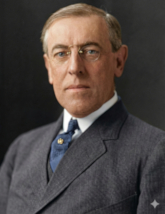
Woodrow Wilson, uniquely an academic-turned-president with a Ph.D., applied his political theories to governance. He rose from academia to Princeton's presidency and New Jersey governor before winning the presidency in 1912 amid a Republican split. His first term featured major progressive reforms dismantling the "Triple Wall of Privilege," including tariff reduction, the Federal Reserve, antitrust laws, and labor protections. His second term focused on WWI leadership, including the Fourteen Points and League of Nations efforts. His legacy is mixed: institutional innovations and moral diplomacy contrasted with civil rights regressions, civil liberties suppression, and political fallout from his 1919 stroke and failed League ratification.
Positive
Wilson's presidency is noted for significant legislative achievements, including the establishment of the Federal Reserve System, the Federal Trade Commission, and the Clayton Antitrust Act, which collectively transformed the American economic landscape. His commitment to progressive reforms and the promotion of internationalism through the League of Nations marked a pivotal shift in U.S. foreign policy.
Negative
Wilson's presidency was marred by the re-segregation of the federal government, which reversed progress for African Americans, and the suppression of civil liberties through the Espionage and Sedition Acts. His failure to secure U.S. entry into the League of Nations and the subsequent isolationism contributed to global instability.
Basic Information
Full Name
Woodrow Wilson
Party
Democratic
Term
Mar 4, 1913 - Mar 4, 1921
Lifespan
1856–1924
Vice President(s)
Thomas R. Marshall
Prior Office
34 Governor of New Jersey ((1911–1913))
Education
Degree
Ph.D.
Studies
history and political science
Election Results
Election Year(s)
1912
Primary Opponent(s)
Theodore Roosevelt
Popular Vote
6296284 (41.8%)
Electoral Votes
435 / 531
Voter Turnout
59.0%
Woodrow Wilson: The Scholar Who Became President and Shaped Modern America
Woodrow Wilson, the only U.S. president with a Ph.D., brought a unique academic perspective to the Oval Office, leading to a transformative presidency marked by both groundbreaking achievements and controversial decisions.
Reading Time:6 min min
Readability:66
Woodrow Wilson: The Scholar Who Became President and Shaped Modern America
Woodrow Wilson, the 28th president of the United States, remains a compelling figure in American political history. Often referred to as the