Theodore Roosevelt
President #26 • Republican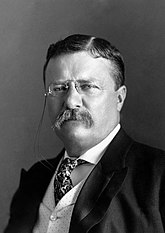
Summary
Positive
Theodore Roosevelt's presidency is marked by significant achievements including the establishment of the regulatory state, aggressive conservation efforts that preserved millions of acres of public land, and a transformative foreign policy that elevated the United States to a global power status. His progressive agenda and the 'Square Deal' approach legitimized organized labor and aimed for fair treatment of capital, labor, and the public.
Negative
Roosevelt's presidency faced criticism for significant controversies, notably the Brownsville Affair where he dishonorably discharged black soldiers without due process, reflecting racial bias. Additionally, his aggressive expansion of executive power set a precedent for the 'Imperial Presidency,' which some argue undermined the checks and balances intended by the Founders.
Basic Information
| Full Name | Theodore Roosevelt |
|---|---|
| Party | Republican |
| Term | Sep 14, 1901 - Mar 4, 1909 |
| Lifespan | 1858–1919 |
| Vice President(s) | Office vacant, September 14, 1901 – March 4, 1905, Charles W. Fairbanks, March 4, 1905 – March 4, 1909 |
| Prior Office | 25 Vice President of the United States |
Education
| Degree | magna cum laude |
|---|---|
| Studies | natural history and philosophy |
Election Results
| Election Year(s) | 1904 |
|---|---|
| Primary Opponent(s) | Alton B. Parker |
| Popular Vote | 7630457 (56.4) |
| Electoral Votes | 336 / 476 |
| Voter Turnout | 65.5 |
The Dynamic Presidency of Theodore Roosevelt: A Legacy of Transformation
The Dynamic Presidency of Theodore Roosevelt: A Legacy of Transformation
Theodore Roosevelt, who served as the 26th President of the United States from 1901 to 1909, is often regarded as a pivotal figure in the evolution of the modern American presidency. Ascending to the office at just 42 years old following the assassination of President William McKinley, Roosevelt faced the monumental task of redefining the role of the presidential office amid rapidly changing political and economic landscapes.
A New Kind of Leadership
Roosevelt is famous for his energetic and vigorous approach, often termed the Stewardship Theory. This idea posited that the president should act as a steward for the people, taking necessary actions for the public good—even if not explicitly allowed by the Constitution. It marked a significant shift from the more passive leadership styles of his predecessors, pushing the boundaries of presidential authority.
Roosevelt's early life and background were formative in shaping his views. A Harvard graduate with interests in natural history, he moved through various political roles, gaining firsthand experience in governance. From a reforming assemblyman in the New York State Assembly to a controlling force as Assistant Secretary of the Navy, Roosevelt’s career was characterized by a relentless pursuit of progress and reform.
Progressive Policies: The Square Deal
Roosevelt initiated an ambitious agenda known as the Square Deal, which aimed at the preservation of the environment, the regulation of corporations, and consumer protection. One of his landmark moments came in 1902 when he ordered the Justice Department to sue the Northern Securities Company—a major railroad monopoly. This marked the first time a president took such bold action under the Sherman Antitrust Act, demonstrating that he was serious about curbing corporate power.
He gained the nickname “Trust Buster”, which carried both reverence and criticism. Roosevelt made a distinction between “good trusts” that he believed benefited the economy, and “bad trusts” that exploited consumers. This perspective shaped future antitrust sentiment in the U.S.
Labor Relations and the 1902 Coal Strike
Another defining moment for Roosevelt was the 1902 Anthracite Coal Strike, during which 140,000 miners demanded fair wages and union recognition. Instead of sending in troops to break the strike, as was common practice, Roosevelt acted as a mediator by inviting both sides to negotiate directly. His willingness to intervene paved the way for a precedent where the government served as a neutral party rather than an enemy to labor. This moment heralded the concept that business and labor deserved fair treatment.
Foreign Policy: A President on the World Stage
Roosevelt's influence extended beyond domestic policies. His famous phrase, “Speak softly and carry a big stick,” encapsulated his approach to foreign relations. Under his leadership, the United States transitioned from a nation largely focused on domestic affairs to an emerging global power. The construction of the Panama Canal solidified the U.S. position in international politics and trade, although it raised questions about American imperialism.
His role in mediating the Russo-Japanese War earned him the Nobel Peace Prize, highlighting his commitment to maintaining global stability. However, critics note that his aggressive posturing, especially in Latin America through the Roosevelt Corollary to the Monroe Doctrine, often strained relationships with regional powers.
Achievements and Controversies
Despite Roosevelt's many accolades, his presidency was not without its controversies. The Brownsville Affair stands as a striking example where he dishonorably discharged an entire African American regiment without a trial, reflecting a troubling racial bias that contradicted his progressive ideals. This incident revealed the complex nature of his legacy; he was a champion of certain rights while simultaneously upholding racial prejudices of the era.
Additionally, his commitment to expanding executive power laid the groundwork for what some have termed the Imperial Presidency, raising concerns about the balance of power among branches of government. His aggressive use of executive orders dramatically increased their use, an aspect of his presidency that would influence his successors.
Legacy: The Age of Roosevelt
At the conclusion of his presidency, Roosevelt left behind a complicated but remarkable legacy. He successfully initiated sweeping reforms that shaped modern American governance, including significant advancements in conservation, regulatory policies, and labor relations. Under his stewardship, the national parks system expanded, and a newfound commitment to environmental conservation was recognized—a feat that earned him considerable admiration.
Roosevelt’s impact on the presidency was transformative; historians often place him among the greatest U.S. presidents, alongside figures like Washington and Lincoln. His approach to the office embodied the spirit of the Progressive Era, combining personality, policy, and a robust governmental role that defined an era.
Conclusion
In summary, Theodore Roosevelt was more than just a president; he was a dynamic force that reshaped the political landscape of America. His leadership style, policies, and willingness to challenge existing norms set a precedent for future leaders. While his presidency was marred by controversy and contradictions, his indelible mark remains a crucial chapter in the historical narrative of the United States. Roosevelt personified the spirit of progress, activism, and complexity that continues to engage and challenge society today.