William McKinley
President #25 • Republican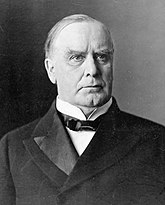
Summary
Positive
William McKinley is credited with creating the infrastructure of the modern White House, establishing the Gold Standard and enacting the Dingley Tariff, which ended the uncertainty that had paralyzed the economy since 1893. His decisive victory in the Spanish-American War and the successful implementation of the Open Door Policy forced European powers to recognize the United States as a first-rate power, effectively ending American isolationism and setting the stage for what would become the 'American Century.'
Negative
The decision to annex the Philippines led to a brutal, three-year counter-insurgency war resulting in the deaths of over 4,000 American soldiers and hundreds of thousands of Filipinos. McKinley engaged in a 'policy of silence' regarding the deterioration of black civil rights in the South, prioritizing reconciliation with white Southerners over the protection of black citizens. Additionally, he rolled back some of Grover Cleveland’s civil service reforms, which was criticized as a regression to the spoils system.
Basic Information
| Full Name | William McKinley |
|---|---|
| Party | Republican |
| Term | Mar 4, 1897 - Sep 14, 1901 |
| Lifespan | 1843–1901 |
| Vice President(s) | Garret Hobart, March 4, 1897 – November 21, 1899, (Died in office), Office vacant, (Balance of Hobart's term), Theodore Roosevelt, March 4 – September 14, 1901, (Succeeded to presidency) |
| Prior Office | 39 Governor of Ohio ((1892–1896)) |
| Note | assassinated |
Education
| Degree | Unknown |
|---|---|
| Studies | Unknown |
Election Results
| Election Year(s) | 1900 |
|---|---|
| Primary Opponent(s) | William Jennings Bryan |
| Popular Vote | 7212864 (51.6) |
| Electoral Votes | 292 / 447 |
| Voter Turnout | 73.7 |
William McKinley: The President Who Built America’s Modern Path
William McKinley: The President Who Built America’s Modern Path
William McKinley, the 25th president of the United States, may not be as widely remembered as figures like Lincoln or Roosevelt, but his presidency (1897-1901) marked a crucial turning point for the nation. From leading the country out of severe economic struggles to guiding it into a new era of imperialism, McKinley's story is both compelling and complex.
Harnessing His Early Life and Career
McKinley was born in Niles, Ohio, on January 29, 1843. His early life was shaped by the moral lessons of the Civil War and the ideals of hard work and fairness. After serving as a soldier in the Civil War, where he rose from private to brevet major, McKinley pursued a law degree and entered politics, becoming a member of Congress and eventually the governor of Ohio.
His political career was marked with a steadfast loyalty to the Republican Party, where he skillfully navigated the turbulent waters of gerrymandering and party politics, ultimately setting the stage to be the Republican nominee for president in 1896.
A Time of Economic Turmoil and Reform
When McKinley took office, America was reeling from the Panic of 1893, a severe economic depression. He focused on economic recovery through protective tariffs and the endorsement of the gold standard, which stabilized the currency and restored confidence in U.S. markets. His implementation of the Dingley Tariff raised duties to unprecedented levels, significantly benefiting American industries and marking McKinley as a champion of protectionism.
Critics viewed these actions with skepticism, arguing the high tariffs stifled foreign trade. However, McKinley's policies contributed to a remarkable economic turnaround, leading to lower unemployment rates and revitalizing American industry.

Political Maneuvering: The 1896 and 1900 Elections
The elections of 1896 and 1900 showcased McKinley's political acumen. The race against Democrat William Jennings Bryan was framed as a battle between the agrarian past and an industrial future, with the gold standard symbolizing stability and prosperity. McKinley’s tactic of a “Front Porch Campaign”—holding meetings with delegations at his home rather than traveling extensively—helped him maintain a dignified public persona while generating support.
His wins in both elections confirmed a shift towards Republican dominance in politics, signaling the end of the old political order and the advent of the “Fourth Party System.” McKinley’s ability to unite business interests and working-class voters profoundly altered the political landscape of the nation.
The Spanish-American War: A New Empire
As McKinley’s presidency progressed, the focus turned to international affairs, particularly the struggles for independence in Cuba. While initially hesitant to engage in war, the explosion of the USS Maine in Havana Harbor galvanized public sentiment, leading to the Spanish-American War in 1898. This conflict, brief but transformative, saw the U.S. emerge as a global power. McKinley’s administration acquired territories such as Puerto Rico, Guam, and the Philippines—actions that initiated an era of American imperialism.
However, this newfound power was not without controversy. The subsequent Philippine-American War illuminated the darker side of American expansionism, sparking debates about race, imperialism, and the ongoing struggle for civil rights back home.
Achievements and Controversies
William McKinley’s presidency was shaped by significant achievements, including:
- Economic Recovery: Stabilized the economy post-Panic of 1893, restoring investor confidence.
- Territorial Expansion: Expanded American influence overseas, officially marking the U.S. as a global power.
- Bipartisanship: Fostered relationships across party lines, improving congressional cooperation.
Yet, his presidency was also marred by failures, particularly regarding racial issues. McKinley’s silence on lynchings and civil rights for African Americans drew criticism, especially in the face of violence like the Wilmington Insurrection in 1898.
A Lasting Legacy
Tragically, William McKinley’s presidency was cut short when he was assassinated in 1901, just months into his second term. Remarkably, his impact endures. Historians increasingly recognize him as the architect of modern presidential power and policy, who not only confronted the financial crises of his time but also laid the groundwork for America's 20th-century expansion.
His administration demonstrated a shift from a presidency defined by legislative oversight to one that asserted executive influence in foreign and domestic matters. McKinley was both a product of his era and a harbinger of the complexities that lay ahead for the United States.
In understanding McKinley, we recognize a figure caught between the ideals of American democracy and the realities of governance in a rapidly changing world. As we move further into the history of American politics, the lessons learned from McKinley’s presidency continue to resonate, shaping debates about economic policy, civil rights, and America’s role on the global stage.
Conclusion
While he may not have the same name recognition as some of his successors, William McKinley’s presidency was pivotal in defining modern American politics. His commitment to economic recovery, imperial expansion, and navigating political relationships set the stage for the United States’ emergence as a global leader in the 20th century. His legacy is a complex tapestry of progress, imperialism, and the ongoing struggle for civil rights—a reflection of the United States during a crucial turning point in its history.