Grover Cleveland
President #24 • Democratic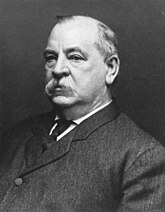
Summary
Positive
Cleveland was known for his integrity and adherence to the principles of limited government and fiscal conservatism. He was the first Democrat elected after the Civil War, marking a significant return of the Democratic Party to national power. His presidency was characterized by a commitment to administrative reform and a strict constitutional approach, which included a notable use of the veto power to block wasteful legislation.
Negative
Cleveland's presidency faced significant challenges, particularly during his second term, which was marked by the Panic of 1893 and widespread economic depression. His handling of labor unrest, particularly the Pullman Strike, alienated the working class and contributed to a rift within the Democratic Party. His refusal to offer federal relief during the depression and his controversial bond deals with private bankers further damaged his reputation.
Basic Information
| Full Name | Grover Cleveland |
|---|---|
| Party | Democratic |
| Term | Mar 4, 1893 - Mar 4, 1897 |
| Lifespan | 1837–1908 |
| Vice President(s) | Adlai Stevenson |
| Prior Office | 22 President of the United States ((1885–1889)) |
Education
| Degree | Unknown |
|---|---|
| Studies | Unknown |
Election Results
| Election Year(s) | 1892 |
|---|---|
| Primary Opponent(s) | Benjamin Harrison |
| Popular Vote | 5554617 (46.0%) |
| Electoral Votes | 277 / 422 |
Grover Cleveland: The Last Jacksonian President Who Left a Mark on Modern America
Grover Cleveland: The Last Jacksonian President Who Left a Mark on Modern America
Grover Cleveland was one of the most polarizing figures in American politics. He is unique for being the only president to serve two non-consecutive terms, holding the 22nd and 24th presidencies from 1885 to 1889 and 1893 to 1897, respectively. His time in office was marked by a commitment to principles like fiscal conservatism and a limited federal government, earning him the label of a "Bourbon Democrat." Yet, his legacy is tinged with controversy, from labor strife to personal scandals.
The Man Behind the Presidency
Born on March 18, 1837, in Caldwell, New Jersey, Cleveland entered a life of political steeped in the values of his Presbyterian upbringing. His father, a minister, died when Grover was just 16, thrusting him into adult responsibilities that curtailed his education.
Instead of college, he learned the law through an apprenticeship, eventually passing the bar exam in 1859. His entry into politics began at the local level, where he gained a reputation for honesty and a no-nonsense attitude while serving as Sheriff of Erie County. This dedication to integrity eventually propelled him into politics as a reform candidate during an era rife with corruption.
Climbing the Political Ladder
Cleveland’s meteoric rise through the political ranks was swift. After his stint as sheriff, he became the Mayor of Buffalo, using his veto power vigorously to counter corruption within the city council. His time in office as governor of New York followed, where he furthered his reformist agenda, often clashing with Tammany Hall, the powerful Democratic political machine in New York City.
In 1884, Cleveland was elected president largely due to his reputation for integrity in a political landscape dominated by corruption, particularly against his rival James G. Blaine. Support from a cadre of reform-minded Republicans known as the Mugwumps helped him clinch a narrow victory in a highly contentious election.
Policies and Achievements
First Term (1885–1889): A New Kind of Presidency
Cleveland’s first term was characterized by a commitment to honest governance. He famously used his veto power more than any previous president, often citing fiscal prudence as his motivation. He vetoed hundreds of pension bills that he deemed fraudulent, asserting that the government should not financially support individuals outside its essential services.
One pivotal moment was his veto of the Texas Seed Bill, which aimed to provide federal assistance to drought-stricken farmers. Cleveland’s reasoning was clear: he believed that government aid should not extend to individuals suffering from natural disasters, reinforcing his strict adherence to a limited governmental role in American society.
Another significant achievement of his first term was the passage of the Interstate Commerce Act of 1887, which established the Interstate Commerce Commission (ICC). This was the first independent federal regulatory agency designed to curb monopolistic practices in the railroad industry.
Second Term (1893–1897): Crisis Management Amid Economic Turmoil
Cleveland returned to office during one of America’s worst economic crises, the Panic of 1893. The burgeoning crisis necessitated difficult decisions as he opted to repeal the Sherman Silver Purchase Act, believing it weakend the nation’s gold reserves. This decision enraged many within his own party, particularly the agrarian factions that advocated for silver-backed currency.
His administration’s response to labor issues was also contentious, particularly during the Pullman Strike of 1894, where he sent federal troops to break the strike, sparking outrage among labor advocates.
Controversy and Scandal
Cleveland’s political career was not without personal scandal. During the 1884 election, it was revealed he had fathered an illegitimate child with Maria Halpin. Although he accepted financial responsibility for the child, the situation became complicated when he allegedly committed Halpin to a mental institution to suppress the scandal when she threatened to reveal their affair.
Moreover, a secret surgery in 1893—removed a malignant tumor from Cleveland's mouth—was kept from the public during a crucial economic downturn to avoid causing panic. This led to questions about transparency and trust in his administration, especially after it came to light years later that he had concealed a severe health issue from the public.
Cleveland's Legacy: A Mixed Legacy
Cleveland’s presidency is often viewed through a lens of contradictions. He championed civil service reform and fiscal conservatism while also being criticized for labor suppression and handling of racial issues. Some historians rank him as a flawed yet principled leader amid tumultuous times. His decisions often reflected an unwavering adherence to limited government, even when the nation demanded more proactive solutions to social and economic issues.
His two terms highlighted the complexities of governance and illustrated the transition in American politics from the era of laissez-faire economics to more involvement in social welfare by the government. While his rigid principles ensured his place in history, they also alienated many voters, resulting in significant losses for the Democratic Party post his leadership.
Conclusion
Grover Cleveland's presidency presents a fascinating case study in the tensions between principles and pragmatism in politics. As the last of the Jacksonian Democrats, he believed in minimal government intervention yet governed during a time that increasingly demanded strong leadership and active policies to address economic and social crises. Ultimately, his story remains a critical chapter in American history, illustrating the balance between ideals and the demanding realities of governance.