Grover Cleveland
President #22 • Democratic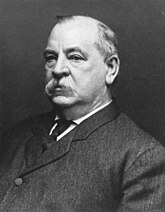
Summary
Positive
Cleveland's presidency is marked by significant achievements such as the establishment of the Interstate Commerce Commission, a commitment to civil service reform, and a strong defense of the gold standard during the Panic of 1893. His use of the veto power transformed the presidency into an active legislative gatekeeper, and he is credited with restoring integrity to the executive branch.
Negative
Cleveland's presidency faced criticism for his rigid adherence to laissez-faire economics, particularly during the Panic of 1893, which led to high unemployment and suffering. His support for the Dawes Act resulted in the devastating dispossession of Native American lands, and his uncompromising stance against the Silverites fractured the Democratic Party, leaving it weaker and more divided.
Basic Information
| Full Name | Grover Cleveland |
|---|---|
| Party | Democratic |
| Term | Mar 4, 1885 - Mar 4, 1889 |
| Lifespan | 1837–1908 |
| Vice President(s) | Thomas A. Hendricks, March 4 – November 25, 1885, (Died in office), Office vacant (Balance of Hendricks's term) |
| Prior Office | 28 Governor of New York ((1883–1885)) |
Education
| Degree | Unknown |
|---|---|
| Studies | Unknown |
The Complexity and Controversies of Grover Cleveland's Presidency
The Complexity and Controversies of Grover Cleveland's Presidency
Early Life and Path to Power
Grover Cleveland, born on March 18, 1837, in Caldwell, New Jersey, rose from a modest background to become the 22nd and 24th president of the United States. Unlike many of his predecessors, Cleveland didn’t come from a well-connected family or have a military background that propelled him into politics. Instead, his qualifications stemmed largely from his experiences in municipal law and local government in Buffalo, New York.
As the fifth of nine children in a Presbyterian minister's household, Cleveland's early life was marked by hardship. The death of his father left the family in financial disarray, forcing him to halt his education to help support his mother and siblings. He eventually became a lawyer through an apprenticeship rather than formal schooling, which makes him one of the few U.S. presidents who never earned a college degree.
Cleveland’s political career began in the 1870s, where he accumulated significant administrative experience as a sheriff and mayor in Buffalo. His dedication to reform and his reputation for integrity drew attention in an era fraught with corruption, particularly within the political machines like Tammany Hall.
Electoral Performance
Cleveland's political journey reached a peak when he won the presidency in 1884, becoming the first Democrat to do so since the Civil War. His campaigns were notable not just for their content but for their overwhelming focus on character. While running against the scandal-ridden James Blaine, Cleveland's personal integrity resonated with voters. He won the popular vote by a slim margin, highlighting the division and political polarization of the time.
In 1888, Cleveland lost to Benjamin Harrison, even after winning the popular vote again—a rare occurrence in American politics. However, he made a triumphant return in 1892, becoming the only U.S. president to regain the office after losing an election.
Major Accomplishments
Cleveland's two terms as president were marked by notable successes and significant challenges.
First Term (1885-1889): The Era of Reform
- Interstate Commerce Act (1887): The crowning achievement of his first term, this act established the Interstate Commerce Commission, marking the federal government’s first serious step into regulating the economy, particularly to curb the monopolistic practices of railroads.
- Veto Record: Cleveland was known as the “Veto King,” successfully rejecting over 400 bills, including many he deemed fraudulent or unnecessary, which reinforced the idea that the president should guard the public interest.
- Civil Service Reform: He expanded civil service reform, moving appointments away from the spoils system and advocating for merit-based hiring in government positions.
Second Term (1893-1897): The Crisis Presidency
Cleveland's second term faced deteriorating economic conditions, specifically during the Panic of 1893, one of the worst economic crises in U.S. history.
- Repeal of the Sherman Silver Purchase Act: In an effort to stabilize the economy, he worked to repeal this act, which required the government to buy large amounts of silver, causing a depletion of gold reserves.
- Intervention in Labor Strikes: During the Pullman Strike of 1894, Cleveland took a controversial stand by sending federal troops to break the strike, which prioritized economic recovery over labor rights and significantly alienated many workers.
Controversies and Scandals
Cleveland's presidency was not without its controversies, which largely stemmed from personal and political scandals.
- Maria Halpin Affair: One notable incident during his first campaign was the revelation of a decade-old affair with Maria Halpin, leading to the birth of an illegitimate child. Cleveland handled the allegations with a strategy focused on transparency, which empathized with voters despite his personal issues.
- Secret Surgery: In 1893, to avoid panic during a financial crisis, Cleveland underwent a secret surgery to remove cancer, creating a significant health scandal when the truth was revealed years later.
- Hiring a Substitute During the Civil War: Amidst accusations of not serving in the Civil War, Cleveland hired a substitute to fulfill his draft obligations, a decision that would ultimately hurt his reputation.
Impact on the Presidency and Legacy
Cleveland’s presidency left a complex legacy. Historians often view him as a defender of honesty and integrity in an age of rampant corruption. His strong use of the veto power redefined the role of the presidency, solidifying its stature as an equal player in governance, but his inflexible policies on economic matters led to a rift within the Democratic Party.
Notably, Cleveland's emphasis on classical liberalism during a time of social change made him a relic in the evolving political landscape. By the end of his presidency, the Democratic Party split, paving the way for a broader ideological shift, particularly under leaders like William Jennings Bryan.
In conclusion, Grover Cleveland stands as a controversial yet significant figure in American history. His blend of reform, personal scandal, and ultimate struggles with an evolving nation highlight the continued complexities of American democracy. His presidency illustrates both the strengths and limits of principled governance amidst societal change.