Chester Alan Arthur
President #21 • Republican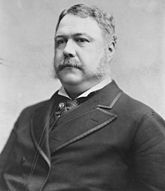
Summary
Positive
Chester A. Arthur's presidency was marked by significant accomplishments, including the passage of the Pendleton Civil Service Reform Act, which established a merit-based system for federal employment, and the modernization of the U.S. Navy, laying the groundwork for America's future naval power. He also demonstrated integrity by pursuing the Star Route scandal investigations, showing a commitment to combating corruption.
Negative
Despite his early advocacy for civil rights, Arthur's presidency is criticized for its lack of action against the dismantling of black rights in the South and for signing the Chinese Exclusion Act, which restricted immigration based on race. His administration's failure to robustly defend civil rights marked a retreat from the promises of Reconstruction.
Basic Information
| Full Name | Chester Alan Arthur |
|---|---|
| Party | Republican |
| Term | Sep 19, 1881 - Mar 4, 1885 |
| Lifespan | 1829–1886 |
| Vice President(s) | Office vacant |
| Prior Office | 20 Vice President of the United States |
Education
| Degree | Bachelor's degree |
|---|---|
| Studies | Classical studies |
Election Results
| Election Year(s) | 1880 |
|---|---|
| Primary Opponent(s) | Winfield Scott Hancock |
| Popular Vote | 4453611 (48.3) |
| Electoral Votes | 214 / 369 |
| Voter Turnout | 79.4 |
Chester A. Arthur: The Accidental President Who Became a Reformer
Chester A. Arthur: The Accidental President Who Became a Reformer
When Chester A. Arthur assumed the presidency in 1881, he did so under tragic circumstances. He took office after the assassination of James A. Garfield, a violent act orchestrated by a disgruntled office-seeker. Many viewed Arthur as an accidental president—a man who had risen through the political machine of New York's Stalwarts and was tainted by the corrupt political practices of his predecessors. However, his time in office would surprise everyone. Far from perpetuating the corruption of the Gilded Age, Arthur carved out a legacy that would reshape the presidency and establish important modern governance principles.
The Paradox of Power: From Stalwart to Reformer
Arthur, born in 1829, initially carved a niche as a civil rights attorney known for fighting against slavery and segregation in New York. This early dedication to justice stood in stark contrast to his future role as a product of the patronage system that defined American politics in the late 19th century. As a Stalwart, Arthur thrived in a world where political favors and loyalty dictated power.
With Garfield's assassination forcing him to lead, Arthur took a bold step away from this legacy by recognizing the need for reform, particularly in the civil service. His administration's crowning achievement was the Pendleton Civil Service Reform Act of 1883, which established a merit-based system for federal employment, significantly curbing the sort of political favoritism for which he had once been known.
Achievements in Administration and Governance
Rather than simply being a placeholder for political allies, Arthur's administration marked a pivotal transition towards professional governance. Here are some key accomplishments:
- Civil Service Reform: The Pendleton Act, signed into law in 1883, mandated that government jobs be awarded based on merit rather than political connections. This monumental shift began the process of professionalizing the federal workforce, providing a model for future administrations.
- Naval Modernization: Arthur recognized that the U.S. Navy was falling behind global standards and took significant steps towards modernizing it. His initiatives brought America's naval capabilities into the age of steel and steam, laying the groundwork for the Navy's later successes.
- Trade Expansion Policies: Arthur's administration sought to expand U.S. commerce through bilateral trade agreements, emphasizing the importance of international markets for American goods. Such measures shifted the focus from military interventionism to economic cooperation.
Controversies: Stains on His Legacy
However, Arthur's presidency wasn’t without its challenges. While he advanced important reforms, he also faced criticism for his inaction on civil rights and immigration policies:
- Civil Rights Retreat: Although Arthur had a background as a civil rights attorney, his presidency witnessed a deterioration in the rights of African-Americans, particularly in the South after Reconstruction.
- Chinese Exclusion Act: Although he originally vetoed a harsh immigrant ban, political pressure compelled him to sign the 1882 Chinese Exclusion Act, which marked the first significant federal restriction on immigration based on race. While it was politically expedient, it left a controversial mark on his presidency.
Personal Struggles: Health Issues and Political Isolation
Chester Arthur's time in office was complicated by his personal battles with health issues. Shortly after assuming the presidency, he was diagnosed with Bright's Disease, a serious kidney ailment. Despite his declining health, he maintained his role with dignity and pressed forward with legislative agendas. However, his condition limited his energy and stymied his ability to fully engage in the 1884 election, leading to his defeat in the Democratic National Convention. Arthur's refusal to utilize political machinery to secure his renomination indicated his transformation from a partisan politician to a statesman more concerned about governance than political survival.
Bipartisan Cooperation and Challenges
Interestingly, Arthur's presidency was characterized by his ability to broker bipartisan cooperation, particularly in his relationships with Congress. Although he initially alienated many within the Republican Party, both Stalwarts and Reformers, he learned to collaborate with Democrats and progressive Republicans to achieve legislative success.
His administration successfully passed critical legislation by gathering support across party lines. Nevertheless, Arthur's moderate reform tendencies often put him at odds with the more vocal factions within the Republican Party, leading to political friction.
Conclusion: A Complex and Impactful Legacy
Chester A. Arthur's presidency serves as a fascinating study in contrasts. Once a product of the very political corruption he fought against, he transformed into an advocate for meaningful reform and modernization. His legacy is a testament to the complexities of American politics where personal history and larger societal changes oftentimes collide. As contemporary journalist Alexander K. McClure noted, Arthur entered the presidency despised but left with respect—a remarkable turnaround reflecting his unique role in American history. Through civil service reform, naval modernization, and measured foreign policy, Arthur bridged the corrupt practices of the past with the evolving demands of modern governance.
Despite the controversies, the heart of Arthur's legacy lies in his ability to challenge expectations and redefine the presidency— ultimately laying the groundwork for the leaders who followed.