James Abram Garfield
President #20 • Republican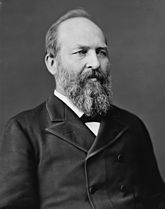
Summary
Positive
Garfield's presidency was marked by significant accomplishments including the restoration of executive authority, financial stabilization through innovative debt refinancing, and a commitment to integrity by investigating corruption within his administration. His efforts to elevate the presidency and promote civil rights through education and appointments showcased his vision for a more equitable society.
Negative
Garfield's presidency was marred by his naivety regarding security and patronage, which ultimately led to his assassination. His inability to manage the influx of office seekers and implement basic security protocols left him vulnerable, culminating in a tragic end to his transformative administration.
Basic Information
| Full Name | James Abram Garfield |
|---|---|
| Party | Republican |
| Term | Mar 4, 1881 - Sep 19, 1881 |
| Lifespan | 1831–1881 |
| Vice President(s) | Chester A. Arthur, (Succeeded to presidency) |
| Prior Office | U.S. Representative for Ohio's 19th District ((1863–1881)) |
Education
| Degree | Bachelor's degree |
|---|---|
| Studies | Classical studies |
Election Results
| Election Year(s) | 1880 |
|---|---|
| Primary Opponent(s) | Winfield Scott Hancock |
| Popular Vote | 4453611 (48.3) |
| Electoral Votes | 214 / 369 |
| Voter Turnout | 79.4 |
James A. Garfield: The Scholar-President Who Reformed the Executive Office
James A. Garfield: The Scholar-President Who Reformed the Executive Office
When you think of James A. Garfield, you might picture a bearded man from the 19th century or recall the sorrow surrounding his assassination. Yet, Garfield's brief presidency—lasting just 200 days—was marked by profound changes that helped redefine the executive branch of the United States.
The Rise of a Scholar
Born in 1831 in a log cabin in Ohio, Garfield's early life was filled with hardship. He grew up without a father, struggling through poverty, yet his keen intellect shone through the darkness. By the time he was 26, Garfield had earned degrees from two colleges and was a professor at Hiram College. His ability to speak eloquently and persuasively allowed him to navigate the complex world of politics effectively.
Before becoming president, Garfield dedicated almost two decades serving in the U.S. House of Representatives, where he shaped policies on finance and the military. His journey from humble beginnings to the pinnacle of American politics reflects a quintessential American success story, aptly earned through hard work, perseverance, and an unwavering commitment to service.
A New Era for the Presidency
Garfield assumed the presidency during the Gilded Age, a time of rapid industrial growth, political corruption, and social upheaval. He came into office with a vision to restore dignity to a presidency seen as subservient to Congress. His battle against the Stalwarts—a faction that favored the patronage system—was especially significant. He believed that presidential authority should not be compromised by Senate control over appointments. One of his bold moves included appointing his rival, James G. Blaine, as Secretary of State, which signaled his intention to assert the presidency’s independence.
The Battle for Appointments
One of Garfield's most defining challenges was the investigation into the New York Customs House, a hub of patronage and corruption controlled by Stalwart leader Roscoe Conkling. Garfield took a stand, refusing to allow Conkling to dictate appointments in his administration. His insistence on appointing William H. Robertson, a Conkling opponent, led to heated confrontations but ultimately restored the president's right to make personnel decisions independently. Garfield's actions here set a vital precedent for the authority of future presidents.
Financial Innovations
Along with restoring executive power, Garfield tackled the growing debt crisis facing the nation. In collaboration with Treasury Secretary William Windom, he implemented an innovative plan to refinance $200 million in federal bonds without congressional approval, effectively saving the government millions in interest payments. This maneuver was a testament to his financial acumen, showcasing how he prioritized the nation's economic health over political maneuvering.
Legacy of Civil Rights and Integrity
Garfield also advocated for civil rights, recognizing the importance of education for the newly freed African American population. He believed that literacy was the key to progress and proposed federal support for universal education, a vision that was ahead of its time. Notably, he appointed Frederick Douglass to a significant position, demonstrating his commitment to racial equality at a moment when such actions were rare.
Yet, Garfield's presidency wasn't free of controversy. His association with the Credit Mobilier scandal—allegations that he benefited from corrupt practices—followed him throughout his political career. Although he maintained his innocence, raising doubts about his integrity, he was more committed to investigating government corruption than many of his contemporaries, setting a standard for transparency that would influence future reforms.
A Tragic End
Unfortunately, Garfield's progressive agenda and reformative policies were cut short when he was shot by an office seeker, Charles Guiteau. Garfield's death stirred public outrage over the state of political patronage and spurred the passage of the Pendleton Civil Service Reform Act in 1883, which established merit-based appointments in federal jobs.
Key Takeaways
- Intellectual Approach: Garfield was both a scholar and a politician, combining academic rigor with a firm grasp on governance.
- Presidential Independence: His battles with Senate factions restored the executive's power to appoint officials and set a precedent for future presidents.
- Financial Reforms: Effective refinancing strategies saved taxpayers millions, exemplifying his capacity for financial management in government.
- Commitment to Civil Rights: He put forth progressive ideas for education and integration while appointing notable African Americans to key positions.
- Lasting Impact: His presidency sparked significant reforms in government structure following his assassination, reshaping how politics operated in America.
Conclusion
In summary, Garfield’s presidency, although brief, was transformative for the executive branch of the U.S. Garfield emerged not just as a figure of tragedy but as a figure of academic brilliance and reform. His legacy laid the groundwork for expanded presidential authority and initiated strides toward equity and transparency in governance, shaping the face of future administrations.