Abraham Lincoln
President #16 • Republican, National Union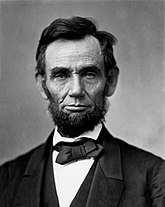
Summary
Positive
Lincoln's presidency is marked by his leadership during the Civil War, his commitment to preserving the Union, and his role in the abolition of slavery through the Emancipation Proclamation and the passage of the 13th Amendment. He implemented significant domestic legislation that laid the groundwork for modern American capitalism, including the Homestead Act and the Pacific Railroad Act.
Negative
Lincoln faced criticism for his suspension of civil liberties, particularly the suspension of habeas corpus, which set a precedent for executive overreach. His administration also dealt with the Dakota War of 1862, where he approved the execution of 38 Dakota men, a decision that remains a controversial aspect of his legacy.
Basic Information
| Full Name | Abraham Lincoln |
|---|---|
| Party | Republican, National Union |
| Term | Mar 4, 1861 - Apr 15, 1865 |
| Lifespan | 1809–1865 |
| Vice President(s) | Hannibal Hamlin (March 4, 1861 – March 4, 1865), Andrew Johnson (March 4 – April 15, 1865, Succeeded to presidency) |
| Prior Office | U.S. Representative for Illinois's 7 District ((1847–1849)) |
| Note | (Died in office) |
Education
| Degree | Unknown |
|---|---|
| Studies | Unknown |
Election Results
| Election Year(s) | 1864 |
|---|---|
| Primary Opponent(s) | George B. McClellan |
| Popular Vote | 2183888 (55.0%) |
| Electoral Votes | 212 / 233 |
| Voter Turnout | 81.8% |
Abraham Lincoln: The Leader Who Transformed a Nation
Abraham Lincoln: The Leader Who Transformed a Nation
Abraham Lincoln, the 16th President of the United States, famously guided the nation through its Civil War, a tumultuous period that not only determined the fate of the Union but also redefined America's ideals of liberty and equality. From humble beginnings in Kentucky to the highest office in the land, Lincoln's journey is a testament to resilience, intellect, and moral fortitude. But Lincoln's presidency was not merely about heroic moments; it was a complex narrative of challenges, decisions, and transformations.
Early Life and Rise to Power
Born on February 12, 1809, in Hardin County, Kentucky, Lincoln's early life was marked by hardship. His family moved around frequently, but they settled in Indiana when he was a teenager. Lacking formal education—he received less than a year of schooling—Lincoln turned to self-education. He became an avid reader, consuming literature from the Bible to Shakespeare, honing a sharp analytical mind that would serve him well in politics.
After a stint as a rail-splitter and a surveyor, Lincoln entered politics, serving in the Illinois State Legislature and a single term in the U.S. House of Representatives. His time in Congress was marked by his opposition to the Mexican-American War and his early, cautious approaches toward the issue of slavery. Despite losing his election for the Senate in 1858, his debates with Stephen Douglas brought him national attention and the Republican Party's nomination for the presidency in 1860.
The 1860 Election and the Start of the Civil War
Lincoln's election in 1860 ignited a divisive political and social climate. He won with only 39.8% of the popular vote, leading Southern states to fear that slavery would be abolished. This fear played a significant role in the secession of Southern states and the onset of the Civil War. Lincoln’s initial stance was to preserve the Union; however, as the war escalated, it became clear that he also needed to address the moral implications of slavery.
Leadership During the Civil War
As the Civil War raged, Lincoln's leadership was tested in unimaginable ways. He made rapidly evolving decisions to meet the unprecedented challenges of war. For instance, he took bold steps like calling for volunteer troops without congressional approval and suspending habeas corpus to maintain public order. Critics denounced these actions as overreach, but Lincoln argued they were necessary for the nation's survival.
One of his significant achievements during this time was the Emancipation Proclamation, declared on January 1, 1863. While it initially freed only enslaved people in Confederate-held territory, it marked a significant shift in the war’s purpose—from just preserving the Union to also liberating slaves. This act laid the foundation for the Thirteenth Amendment, which would permanently abolish slavery.
Accomplishments and Controversies
Lincoln's presidency was characterized by remarkable accomplishments along with significant controversies. His administration expanded federal power to unprecedented levels, establishing a strong central government capable of directing a national war effort and transforming the economy.
Achievements
- The Homestead Act (1862): This law granted 160 acres of public land to settlers, promoting westward expansion and supporting agrarian growth.
- The National Banking Acts: These acts reformed the banking system, creating a stable national currency and laying the groundwork for a modern financial system.
- The Transcontinental Railroad Act: Lincoln supported legislation that funded the construction of a transcontinental railroad, linking the nation economically and facilitating trade and travel.
Controversies
However, Lincoln’s presidency was not without strife. His suspension of civil liberties during wartime raised questions about the balance between security and freedom. Additionally, his leadership during the Dakota War in 1862, which resulted in the largest mass execution in U.S. history, remains a somber note in his legacy.
Legacy: A Transformative Figure
Lincoln’s time in office—marked by the tragic toll of the Civil War—created a lasting impact on the United States. His assertion of federal supremacy laid the groundwork for modern federalism. The abolition of slavery radically altered America's socio-political landscape, rekindling discussions about human rights and moral responsibility. Furthermore, Lincoln's adept navigation of political rivalries showed a level of pragmatism and compromise that many of today’s leaders might learn from.
After his assassination in 1865, Lincoln's legacy grew, evolving from that of a wartime leader to a martyr for freedom and unity. More than just the “Great Emancipator,” he is now seen as an architect of modern America, a symbol of hope and resilience against division and strife.
Conclusion
Abraham Lincoln’s complexities illustrate that leadership is not merely defined by successes and failures but rather by the willingness to learn, adapt, and profoundly transform society. His story is not just about one man’s influence but also reflects the resilience of a nation amidst incredible challenges, a lesson that still resonates today.