Zachary Taylor
President #12 • Whig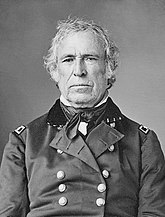
Summary
Positive
Zachary Taylor's presidency is marked by his unwavering defense of the Union during the Crisis of 1850, where he made it clear that he would use military force to crush secession, stalling the momentum for disunion. His refusal to accept the Compromise of 1850 might have triggered the Civil War ten years earlier, highlighting his commitment to preserving the integrity of the United States.
Negative
Taylor's administration faced significant failures, including the Sandy Lake Tragedy, where his executive order led to the removal of the Ojibwe people, resulting in hundreds of deaths. Additionally, his outsider approach to governance led to legislative paralysis, as he failed to build coalitions in Congress, leaving his administration politically impotent.
Basic Information
| Full Name | Zachary Taylor |
|---|---|
| Party | Whig |
| Term | Mar 4, 1849 - Jul 9, 1850 |
| Lifespan | 1784–1850 |
| Vice President(s) | Millard Fillmore, (Succeeded to presidency) |
| Prior Office | Major General of the 1st Infantry Regiment United States Army ((1846–1849)) |
| Note | (Died in office) |
Education
| Degree | None |
|---|---|
| Studies | Unknown |
Election Results
| Election Year(s) | 1848 |
|---|---|
| Primary Opponent(s) | Lewis Cass |
| Popular Vote | 1361393 (47.3%) |
| Electoral Votes | 163 / 290 |
| Voter Turnout | 72.8% |
Zachary Taylor: The Soldier President and His Short-Lived Legacy
Introduction
Zachary Taylor, also known as 'Old Rough and Ready,' is often remembered as a soldier more than a statesman. Taylor, who served as the 12th President of the United States from 1849 until his death in 1850, led a life marked by military achievements and a brief yet tumultuous presidential term. His presidency came at a critical juncture in American history, as tensions between the North and South were beginning to escalate toward the Civil War. In this article, we will explore Taylor's life, presidency, achievements, controversies, and lasting impact on the nation.
A Soldier's Journey to the Presidency
Zachary Taylor was born on November 24, 1784, in Virginia. Raised on the Kentucky frontier, he had no formal education but learned military skills early on. Taylor's military career spanned over four decades, during which he earned a reputation for bravery in multiple conflicts, including the War of 1812 and the Mexican-American War.
Unlike many of his presidential predecessors, Taylor had never held a political office prior to becoming president and famously, he had not even voted in an election. This lack of political experience made him a unique candidate when he ran for president in 1848 as a member of the Whig Party. His military success and image as a patriot appealed to voters who were weary of divisive party politics.
The Election of 1848
The 1848 election was a tumultuous time for American politics, marked by divisions over slavery and territorial expansion. Taylor, representing the Whig Party, benefited from a campaign that skillfully positioned him as a candidate who could unite a fractured electorate. His opponents included Democrat Lewis Cass and Free Soil candidate Martin Van Buren. Taylor won the presidency with about 47% of the popular vote, a plurality but not a majority.
Achievements and Policies
As president, Taylor's term was marked by several significant events and initiatives, despite his brief time in office. One of his major accomplishments was his approach to the contentious issue of slavery in the newly acquired territories from Mexico. He advocated for the immediate admission of California and New Mexico as free states, attempting to sidestep the sectional debate that was tearing the country apart. However, this stance infuriated Southern Whigs who expected him to support slavery's expansion into new territories.
Taylor's administration also saw the establishment of the Department of the Interior, aimed at consolidating federal management of land and resources, an important move during a time of rapid westward expansion.
The Sandy Lake Tragedy
Not all of Taylor's policies were viewed positively. One of the darkest moments of his administration was the Sandy Lake Tragedy, which involved the forced removal of the Ojibwe people from their land, resulting in a high death toll due to harsh conditions and lack of provisions. This event brought significant criticism of Taylor's policies towards Native Americans.
Controversies in Office
Despite his military background, Taylor faced significant challenges with a Congress largely divided along party and regional lines. His presidency was characterized by contentious relations, especially with key political figures like Henry Clay. Taylor's reluctance to align fully with the Whig Party and his independent approach led to isolation in Congress, making it difficult for him to push his agenda effectively.
Taylor is also remembered for the Galphin Affair, a scandal that erupted within his administration involving financial impropriety, further undermining public confidence in his leadership. While Taylor was not directly implicated, his failure to address the scandal promptly weakened his administration's reputation.
The Impact of His Death
Zachary Taylor’s presidency came to a sudden end when he died on July 9, 1850, after falling ill. His death dramatically changed the political landscape. Millard Fillmore, his vice president, succeeded him and signed the Compromise of 1850, which Taylor had vehemently opposed. Many historians speculate that had Taylor lived, he might have taken a strong stance against compromising with pro-slavery factions, potentially sparking an earlier confrontation over slavery.
Lasting Legacy
Taylor's time in office was short but pivotal. He is often viewed as a unifying figure amidst growing sectional tensions, often referred to as a 'sentinel of the Union.' His resolute stance against Southern attempts to expand slavery in new territories showcased a commitment to preserving the Union that would be tested in the years to come. However, his administration's failures, including the treatment of Native Americans and internal corruption, complicate his legacy.
In conclusion, while Zachary Taylor may not be as well-known as some of his contemporaries, his presidency is a fascinating example of the complexity of American politics leading up to the Civil War. He remains a figure of contradictions, caught between his roles as a soldier and a president, navigating an increasingly divided nation at a critical moment in history.