John Tyler
President #10 • Whig, Unaffiliated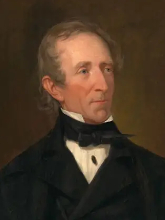
Summary
Positive
Despite profound political isolation, the Tyler administration achieved remarkable successes in foreign policy and territorial expansion, including the resolution of border disputes with Great Britain through the Webster-Ashburton Treaty, the opening of Chinese markets via the Treaty of Wanghia, and the decisive annexation of Texas.
Negative
Tyler's presidency was marked by significant conflict with his own party, leading to his expulsion from the Whig Party and a tumultuous relationship with Congress, culminating in the first impeachment resolution against a president in U.S. history due to his vetoes.
Basic Information
| Full Name | John Tyler |
|---|---|
| Party | Whig, Unaffiliated |
| Term | Apr 4, 1841 - Mar 4, 1845 |
| Lifespan | 1790–1862 |
| Vice President(s) | Office vacant |
| Prior Office | 10 Vice President of the United States |
Education
| Degree | Unknown |
|---|---|
| Studies | Law |
Election Results
| Election Year(s) | 1840 |
|---|---|
| Primary Opponent(s) | Martin Van Buren |
| Popular Vote | 1275390 (52.9) |
| Electoral Votes | 234 / 294 |
| Voter Turnout | 80.3 |
John Tyler: The Accidental President Who Changed American Politics
John Tyler: The Accidental President Who Changed American Politics
When John Tyler became the 10th president of the United States in 1841, he inherited an office and country at a critical juncture. His ascension to the presidency was unprecedented—he was the first to step into the role after the sudden death of a sitting president, William Henry Harrison, which led to significant questions about the nature of presidential succession. Tyler's presidency is often remembered as a strange interlude in American history, but it was marked by significant political maneuvering, territorial expansion, and a bold assertion of executive power that reshaped the office for future leaders.
A Unique Path to Power
Born on March 29, 1790, in Virginia, Tyler came from a lineage steeped in political influence. His father was a close associate of Thomas Jefferson and instilled in Tyler a profound belief in state rights and a deep skepticism of federal power. Despite his heritage, Tyler's approach to politics saw him navigate an uncertain political landscape that led to his unexpected election as vice president under Harrison.
Tyler was a member of the Whig Party, a group initially formed to oppose Andrew Jackson's Democratic policies. However, Tyler's presidency quickly illustrated the divisions within that party. When he refused to back the nationalist agenda of prominent Whig leaders, like Henry Clay, he was expelled from the party, famously becoming “His Accidency”—a president without a partisan base.
Early Challenges and Vetoes
Tyler took office as the nation faced dire economic challenges, with the Panic of 1837 still echoing in the public's consciousness. He found himself at odds not only with the opposition party but also with many of his former colleagues in the Whig Party. His stubbornness in political matters was highlighted by his frequent use of the presidential veto as a bargaining tool. This was a departure from the past, where vetoes were primarily used as checks against unconstitutional laws. Tyler's insistence on vetoing legislation he deemed contrary to the Constitution redefined the power of the presidency.
His confrontational stance created an environment of domestic strife within his administration, culminating in multiple cabinet resignations and a formal expulsion from the Whig Party. Tyler's administration became a battleground in which he sought to assert presidential authority while dealing with the fallout of partisan fracturing.
Triumphs in Foreign Policy
Despite the turmoil at home, Tyler achieved notable success in foreign affairs. Foremost among his accomplishments was the Webster-Ashburton Treaty (1842), which resolved a long-standing boundary dispute with Great Britain, helping to define U.S.-Canadian borders and easing tensions between the two countries. His diplomatic efforts opened up trade opportunities with China through the Treaty of Wanghia, which established terms of commerce that benefitted American traders and laid the groundwork for future relations.
One of the most controversial acts of Tyler's presidency was the annexation of Texas, which many viewed as a deliberate move to expand slavery into new territories. Though faced with opposition, Tyler was relentless in pursuing what he saw as America’s destiny. In doing so, he ignited tensions that would lead to the Mexican-American War and exacerbate sectional divisions, a precursor to the Civil War.
The Tyler Precedent
Tyler’s greatest legacy lies in what historians now refer to as the Tyler Precedent. When President Harrison died, there was significant ambiguity in the Constitution about what should happen next. Tyler interpreted his role as taking full possession of the presidency, rather than being merely an “acting” president. This critical defining moment established a protocol for presidential succession, ensuring that the office would not devolve into a shadow of its authority during times of transition.
His bold assertion of power ensured that future vice presidents would step into the full responsibilities of the presidency, cementing a more stable constitutional framework.
The Aftermath and Legacy
After leaving office in 1845, Tyler faced a hard truth: he was viewed unfavorably as a leader perceived to have exacerbated the nation’s divisions. He retired to his Virginia plantation, where he lived a quieter life until the Civil War ignited. As conflict loomed, Tyler emerged again, actively advocating for Southern interests and secession, aligning himself with the Confederacy—a choice that would further tarnish his legacy. This move positioned him as a Confederate congressman, cementing his status as a figure of controversy in American history.
Tyler's death on January 18, 1862, marked him as the only former president to die while aligned against the Union, further complicating his historical reputation. Notably, his passing went unacknowledged by the federal government, a glaring reminder of his estrangement from the nation he once led.
Though often ranked among the least effective presidents, Tyler's tenure reshaped the office and altered the course of American history. His insistence on asserting executive power, coupled with his actions around territorial expansion, continually evoke reflection on the complexities of presidential leadership during a tumultuous era.
Key Takeaways
- Unprecedented Presidency: Tyler's rise followed the sudden death of President Harrison, leading to the establishment of the Tyler Precedent in presidential succession.
- Political Isolation: After clashing with the Whig Party, Tyler found himself essentially without a political home, leading to conflicts with Congress.
- Foreign Policy Successes: Tyler negotiated key treaties that defined U.S. borders and opened trade with China, despite facing domestic challenges.
- Legacy of Controversy: Tyler’s decisions, particularly regarding Texas and the Confederacy, continue to spark debate about his impact on American history.
- The Evolution of Presidential Power: His presidency marked a critical shift in the understanding and exercise of presidential authority, particularly concerning the veto's role in governance.