George Washington
President #1 • Unaffiliated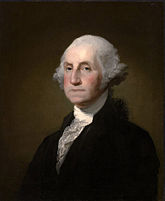
Summary
Positive
George Washington's presidency is marked by significant achievements including the establishment of the executive departments, the Judiciary Act of 1789, and the ratification of the Bill of Rights. He maintained American neutrality during the French Revolutionary Wars, which allowed the nation to survive its most vulnerable years. His voluntary surrender of power after two terms set a precedent for future presidents, distinguishing the office from monarchy.
Negative
Washington's presidency also had notable failures, particularly regarding slavery and Native American policies. He signed the Fugitive Slave Act of 1793, which entrenched the institution of slavery, and his administration oversaw the military conquest of the Northwest Territory, leading to the dispossession of Native Americans. Additionally, his attempts to govern without political parties ultimately failed, contributing to the polarization of the nation.
Basic Information
| Full Name | George Washington |
|---|---|
| Party | Unaffiliated |
| Term | Apr 30, 1789 - Mar 4, 1797 |
| Lifespan | 1732–1799 |
| Vice President(s) | John Adams |
| Prior Office | Commander-in-Chief of the Continental Army ((1775–1783) ) |
Education
| Degree | Surveyor’s Certificate |
|---|---|
| Studies | geometry, trigonometry, surveying, penmanship, comportment |
Election Results
| Election Year(s) | 1789 |
|---|---|
| Popular Vote | 28009 (100%) |
| Electoral Votes | 69 / 69 |
| Voter Turnout | 1.8% – 11.6% |
George Washington: Founding Father and America's First President
George Washington: The Father of His Country
George Washington is often hailed as America’s greatest founding father, a man who led the nascent nation through the crucible of revolution and helped shape it into a functioning democracy. But who was this man behind the legend? His life story is not only a tale of military triumph and presidential leadership; it is also a reflection of the complex and tumultuous times in which he lived.
A Virginian Beginnings
Born on February 22, 1732, in Westmoreland County, Virginia, Washington came from a family of planters. His early life was steeped in the realities of frontier living rather than formal education. While many of his contemporaries honed their political skills at universities, Washington learned to navigate the land and manage estates. This hands-on experience fostered a unique perspective; he envisioned the United States as a vast estate to develop and protect.
At the age of 17, he became a licensed surveyor, receiving his certification from the College of William & Mary. His keen skills in surveying not only shaped his approach to land management but also prepared him for the political landscape he would eventually govern.
Path to Power
Washington’s rise to prominence began with his role in the Virginia militia, where he gained military experience during the French and Indian War. However, it was his leadership during the American Revolutionary War that truly established his credentials. His decisive role as Commander-in-Chief of the Continental Army laid the groundwork for his reputation as a national leader.
After the war, there was a palpable desire for strong national leadership amid fears of domestic chaos. In 1787, Washington presided over the Constitutional Convention, which culminated in the drafting of the U.S. Constitution, a blueprint for self-governance that balanced power between states and the federal government. In 1789, he was elected as the first President of the United States, a position few could have anticipated would hold so much influence.
The Elections: Unanimous Decisions
Washington’s ascent to the presidency was remarkable—not only was he elected unanimously in both elections, but he remains the only president to have achieved this feat. However, context matters here; suffrage was extremely limited, and the electoral system was new and somewhat experimental. Only a fraction of the population was eligible to vote, making his unanimous votes seem more a reflection of elite consensus than mass democratic support.
A self-proclaimed reluctant leader, Washington famously described his inauguration day as akin to being “a culprit going to the place of his execution.” His presidency was not about personal ambition; rather, it was about shaping a fragile nation.
Major Accomplishments and Top Challenges
Washington’s presidency is delineated into two primary phases: the first focusing on establishing the new government and institutions, and the second on navigating crises both domestically and internationally.
First Term (1789-1793): Laying the Foundation
- Establishment of the Executive Departments: Washington created the first Cabinet, laying the groundwork for future administrations. His appointments included rivals like Thomas Jefferson and Alexander Hamilton, which set a tone of cooperation amidst disagreement.
- The Judiciary Act of 1789: This act established a structured federal court system, and Washington appointed the first justices of the Supreme Court, ensuring a strong Federalist influence in the judiciary.
- Hamilton’s Financial Program: By supporting Hamilton’s policies—including the creation of the First Bank of the United States—Washington helped lay the fiscal groundwork for a prosperous economy, promoting stability in the nation.
Second Term (1793-1797): Crisis Management
- The Whiskey Rebellion: In an early test of federal authority, Washington led troops to quell the whiskey farmers’ rebellion in Pennsylvania, demonstrating the federal government’s capability to maintain order.
- The Neutrality Proclamation (1793): Washington’s decision to remain neutral in the conflict between France and Great Britain kept the young nation out of war, affirming the government's focus on stability over entanglement.
- Jay’s Treaty (1794): Although unpopular, this treaty resolved lingering issues with Britain and ensured a decade of peace, but it intensified political divides at home.
However, Washington’s presidency was not without controversy. He faced criticism both for his administration's handling of slavery through the Fugitive Slave Act and treatment of Native Americans—the legacies of his policies continue to evoke debate today.
The Legacy: Washington's Human Side
Beyond his political prowess, Washington's legacy is characterized by both exemplary achievements and failures. He set important precedents for the presidency, including the two-term limit, and fostered an ethos of peaceful transition of power, essential for any democracy. Yet, the realities of his presidency were complex; he struggled with the imposition of federal authority over state laws and the rise of political factions.
In his Farewell Address, he cautioned against the dangers of political parties, a reflection of his growing belief that unity was essential for national strength. Ironically, his leadership style inadvertently fed into the very party divisions he sought to avoid, laying the groundwork for the burgeoning political landscape that followed.
Conclusion
George Washington's presidency was instrumental in setting the character and style of American government. A man of action rather than ideology, he understood the necessity of compromise, cooperation, and restraint. This “Father of His Country” both unified a nation and exemplified the complex duality of heroism and humanity—creating a lasting legacy that still shapes American governance today.
Key Takeaways:
- Washington's presidency set critical precedents for federal authority and the operations of government.
- His leadership style fostered a balance between various powers within the government.
- He faced significant challenges, particularly related to slavery and the treatment of Native Americans.
- Washington's two-term limit became a cornerstone principle of American democracy.
- His farewell address warned against political parties, revealing his concerns about future divisiveness.
Estimated Reading Time: 8 min